

TL;DR
Missing your Income Tax Return (ITR) filing deadline can lead to late filing fees, interest on unpaid taxes, delayed refunds, and the loss of certain tax benefits. For most salaried individuals, the due date for filing ITR for Assessment Year (AY) 2026–27 is 31 July 2026. Understanding the applicable deadlines, penalties, and available options such as belated or revised returns can help you stay compliant and avoid unnecessary costs.
Why Filing Your ITR on Time Matters
Many taxpayers assume that if their employer has already deducted TDS, they do not need to worry about filing an Income Tax Return. However, filing your ITR is important even if your tax liability has already been discharged through TDS.
Timely filing offers several advantages:
- Claim income tax refunds faster.
- Avoid late filing fees and interest.
- Carry forward eligible capital and business losses.
- Maintain a strong financial record for loans and visas.
- Reduce the likelihood of receiving notices for non-compliance.
- Stay compliant with the Income-tax Act.
Filing your return early also gives you sufficient time to correct any errors before statutory deadlines expire.
ITR Filing Due Dates for AY 2026–27
The Income Tax Department prescribes different due dates depending on the category of taxpayer.
| Taxpayer Category | Due Date* |
|---|---|
| Salaried Individuals (ITR-1 / ITR-2, non-audit) | 31 July 2026 |
| Non-audit Business/Professional Cases | 31 August 2026 |
| Taxpayers Requiring Audit | 31 October 2026 |
| Belated Return | 31 December 2026 |
| Revised Return | 31 March 2027 |
- Subject to any extension notified by the Income Tax Department.
It is always advisable to file well before the due date instead of waiting until the final week, when portal traffic is typically at its highest.
What Happens If You Miss the ITR Filing Due Date?
Missing the filing deadline does not necessarily mean you cannot file your return, but it can result in several financial and compliance consequences.
Some of the common implications include:
- Late filing fee under the Income-tax Act.
- Interest on outstanding tax liability.
- Delay in receiving tax refunds.
- Loss of the ability to carry forward certain losses.
- Increased scrutiny in specific cases.
- Additional compliance if a revised or updated return becomes necessary.
Even if no tax is payable, filing late may still affect your financial documentation and eligibility for certain tax benefits.
Late Filing Fee Under Section 234F
If you file your Income Tax Return after the prescribed due date, you may be liable to pay a late filing fee under Section 234F of the Income-tax Act.
| Total Income | Maximum Late Filing Fee |
|---|---|
| Up to ₹5 lakh | ₹1,000 |
| Above ₹5 lakh | ₹5,000 |
The fee is payable in addition to any interest that may be applicable on unpaid tax.
Taxpayers should note that timely filing is generally far less expensive than dealing with penalties and interest after the deadline.
Interest on Outstanding Tax Liability
In addition to the late filing fee, taxpayers may also be liable to pay interest on any unpaid tax if their Income Tax Return is filed after the prescribed due date.
Interest is generally calculated on the outstanding tax amount from the due date until the date of payment, as per the applicable provisions of the Income-tax Act. Even if the amount due is relatively small, the interest continues to accrue until the tax is fully paid.
Example
Suppose your final tax liability after adjusting TDS is ₹25,000, and you file your return several months after the due date without paying the balance tax. In such a case, you may have to pay:
- Outstanding tax
- Applicable interest on delayed payment
- Late filing fee (if applicable)
This is why it’s advisable to calculate your tax liability accurately and pay any balance tax before filing your return.
What Is a Belated Return?
A Belated Return allows eligible taxpayers to file their Income Tax Return even after the original due date has passed.
While this provision provides relief to taxpayers who miss the deadline, it is not without consequences. Filing a belated return may result in:
- Late filing fees.
- Interest on outstanding tax.
- Delayed processing of refunds.
- Restrictions on carrying forward certain losses.
- Additional compliance requirements.
Although a belated return helps maintain tax compliance, it should generally be considered a backup option rather than a preferred approach.
What Is a Revised Return?
A Revised Return enables taxpayers to correct genuine mistakes made in the original Income Tax Return.
You may file a revised return if you discover errors such as:
- Incorrect income reported.
- Missing bank interest.
- Omitted capital gains.
- Incorrect deduction claims.
- Wrong bank account details.
- Clerical or calculation mistakes.
Common reasons for filing a revised return include forgetting to report interest income, selecting the wrong tax regime, or missing eligible deductions. Revising the return within the permitted time can help ensure that your tax records remain accurate.
What Is an Updated Return (ITR-U)?
The Updated Return (ITR-U) is a separate facility available under the Income-tax Act that allows eligible taxpayers to voluntarily update their previously filed return—or file one where permitted—subject to prescribed conditions.
It may be useful in situations such as:
- Omitted income identified after filing.
- Genuine reporting errors.
- Additional tax becoming payable.
- Voluntary tax compliance.
However, an updated return generally involves payment of the applicable additional tax and is available only in specified circumstances. It cannot be used in every situation, so taxpayers should evaluate eligibility carefully before proceeding.
Belated Return vs Revised Return vs Updated Return
| Particulars | Belated Return | Revised Return | Updated Return (ITR-U) |
|---|---|---|---|
| Purpose | File after missing the original due date | Correct errors in an already filed return | Voluntarily update tax information where permitted |
| Filed When | After the original due date | After filing the original return and within the permitted timeline | Subject to the conditions and timelines prescribed under the Act |
| Late Filing Fee | May apply | Generally depends on the original filing status | Additional tax and prescribed conditions may apply |
| Best Used For | Missed deadline | Correcting mistakes | Declaring omitted income voluntarily |
Understanding the difference between these filing options helps taxpayers choose the correct course of action and avoid unnecessary complications.
Consequences of Filing Your ITR Late
Many taxpayers underestimate the impact of filing their return after the due date. While filing late is usually better than not filing at all, it can still lead to avoidable financial and compliance issues.
Some of the possible consequences include:
1. Late Filing Fee
A fee may be payable depending on your total income and the applicable provisions.
2. Interest on Outstanding Tax
Interest may continue to accrue until the outstanding tax is fully paid.
3. Delayed Refund Processing
If you are eligible for an income tax refund, filing late may delay the processing and credit of the refund.
4. Loss of Certain Tax Benefits
In some cases, taxpayers who file after the due date may not be able to carry forward eligible losses, affecting future tax planning.
5. Increased Compliance
Late filing can lead to additional compliance requirements and make future tax planning more cumbersome.
How to Avoid Late Filing Penalties
The easiest way to avoid penalties is to prepare well before the filing season.
Practical Tips
- Collect Form 16 and other tax documents as soon as they become available.
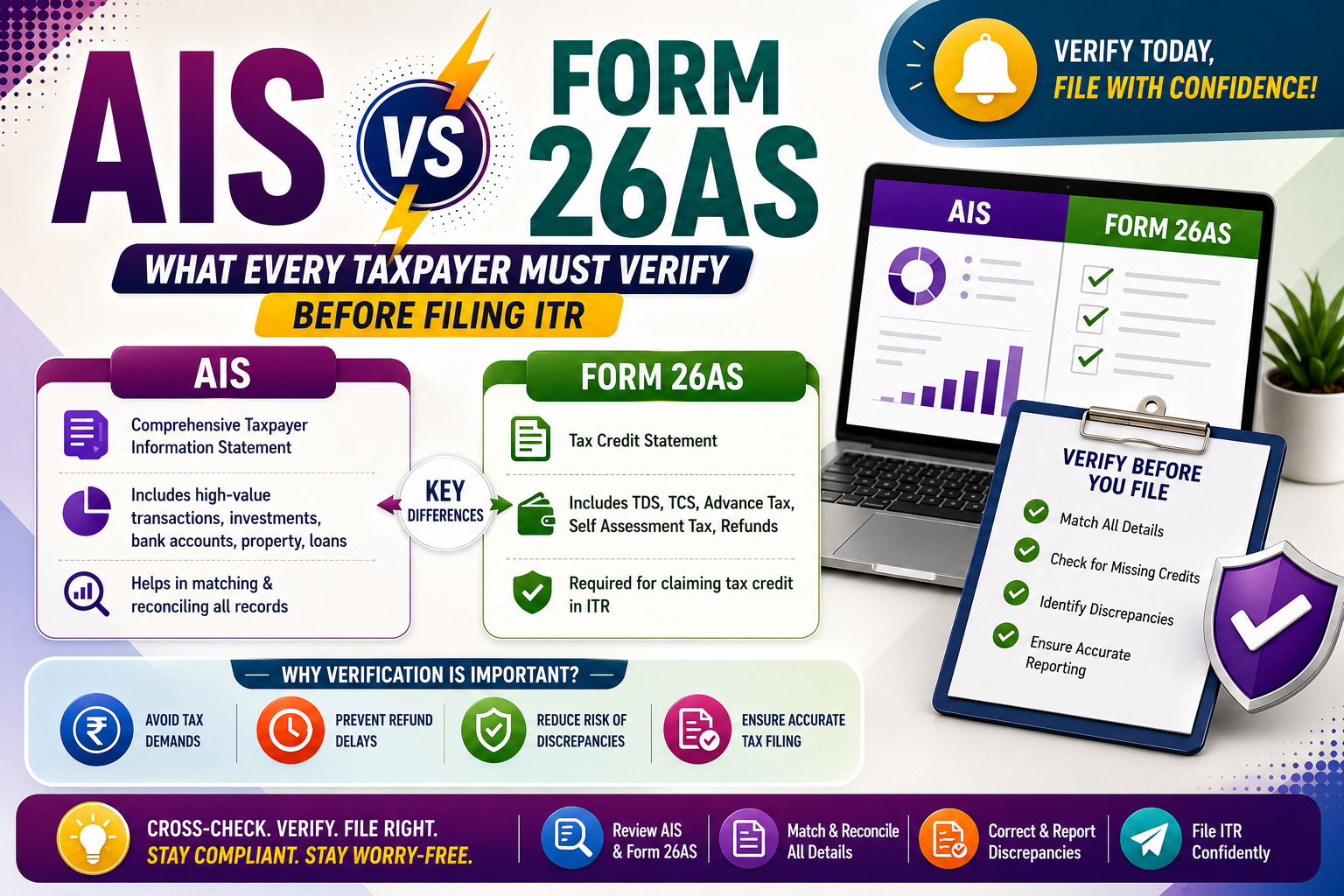
- Review your Annual Information Statement (AIS) and Form 26AS before filing.
- Reconcile salary, interest, and investment income.
- Compare the old and new tax regimes before making your selection.
- Pay any self-assessment tax before submitting your return.
- Complete e-verification immediately after filing.
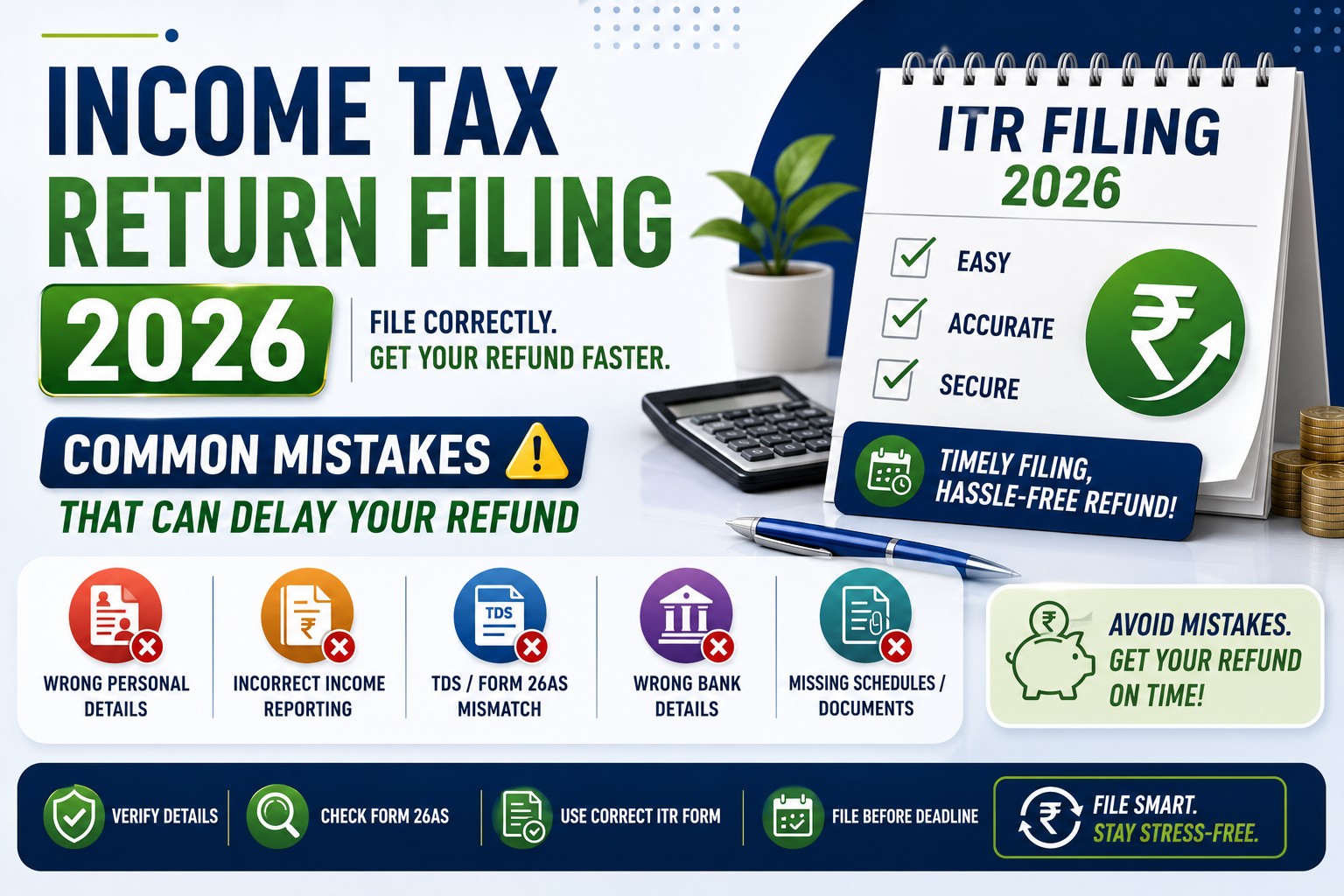
- Avoid waiting until the final few days before the due date.
Early filing also allows enough time to correct any discrepancies before the statutory deadlines expire.
Common Mistakes Taxpayers Make
Avoiding common errors can save both time and money.
Filing the Wrong ITR Form
Always verify that the selected ITR form matches your income profile.
Ignoring AIS and Form 26AS
Mismatch between reported income and departmental records can lead to notices or delayed processing.
Forgetting Interest Income
Interest earned from savings accounts, fixed deposits, and recurring deposits should be reported wherever applicable.
Incorrect Bank Details
Incorrect bank account information can delay tax refunds.
Missing E-Verification
An Income Tax Return is considered complete only after successful verification through the prescribed method.
Waiting Until the Last Minute
Heavy portal traffic, technical issues, or missing documents can make last-minute filing stressful and increase the likelihood of mistakes.
Why Choose Bharat A. Choudhary & Co. for ITR Filing?
Income tax laws continue to evolve, and even a small filing mistake can result in notices, delayed refunds, or unnecessary penalties.
At Bharat A. Choudhary & Co., our experienced Chartered Accountants assist individuals, salaried professionals, business owners, NRIs, and investors with:
- Accurate Income Tax Return filing.
- Tax planning and advisory.
- Selection of the appropriate tax regime.
- Capital gains reporting.
- NRI taxation.
- Income tax notice assistance.
- Revised and updated return filing.
- Refund-related support.
Our objective is to help clients remain compliant while making the filing process simple, accurate, and stress-free.
Conclusion
Filing your Income Tax Return on time is one of the simplest ways to avoid unnecessary penalties, interest, and compliance issues. Understanding the applicable due dates, keeping your documents ready, and filing well before the deadline can help ensure a smooth experience and quicker refund processing.
If you have multiple income sources, investments, capital gains, or are unsure about the correct filing approach, seeking professional guidance can save both time and money.
Need Help Filing Your ITR?
Whether you’re a salaried employee, freelancer, entrepreneur, NRI, or investor, Bharat A. Choudhary & Co. provides professional Income Tax Return filing services tailored to your financial situation.
Get in touch today for accurate, timely, and hassle-free ITR filing with expert Chartered Accountant support.
6. FAQ SECTION
1. What is the last date to file ITR for AY 2026–27?
For most salaried individuals who are not subject to tax audit, the due date for filing the Income Tax Return (ITR) for Assessment Year 2026–27 is generally 31 July 2026, unless extended by the Income Tax Department.
2. What happens if I miss the ITR filing deadline?
Missing the due date may result in late filing fees, interest on unpaid taxes, delayed refunds, and loss of certain tax benefits.
3. Can I file my Income Tax Return after the due date?
Eligible taxpayers can generally file a Belated Return after the original due date, subject to the applicable deadlines and provisions of the Income-tax Act. Filing as early as possible is advisable to minimise penalties and interest.
4. What is the penalty for late ITR filing?
The late filing fee generally depends on your total income and the applicable provisions of the Income-tax Act.
5. What is the difference between a Belated Return and a Revised Return?
A Belated Return is filed after missing the original due date, whereas a Revised Return is filed to correct mistakes in an already submitted return.
6. Can I revise my ITR after filing?
If you discover an error in your filed return, such as omitted income, incorrect deductions, or inaccurate bank details, you can generally file a Revised Return within the prescribed time limit.
7. Will I receive my tax refund if I file late?
Yes, if you are eligible for a refund and your return is processed successfully.
8. Should I hire a Chartered Accountant for ITR filing?
If your tax situation involves multiple income sources, capital gains, foreign assets, business income, or tax notices, professional assistance is highly recommended.