
TL;DR
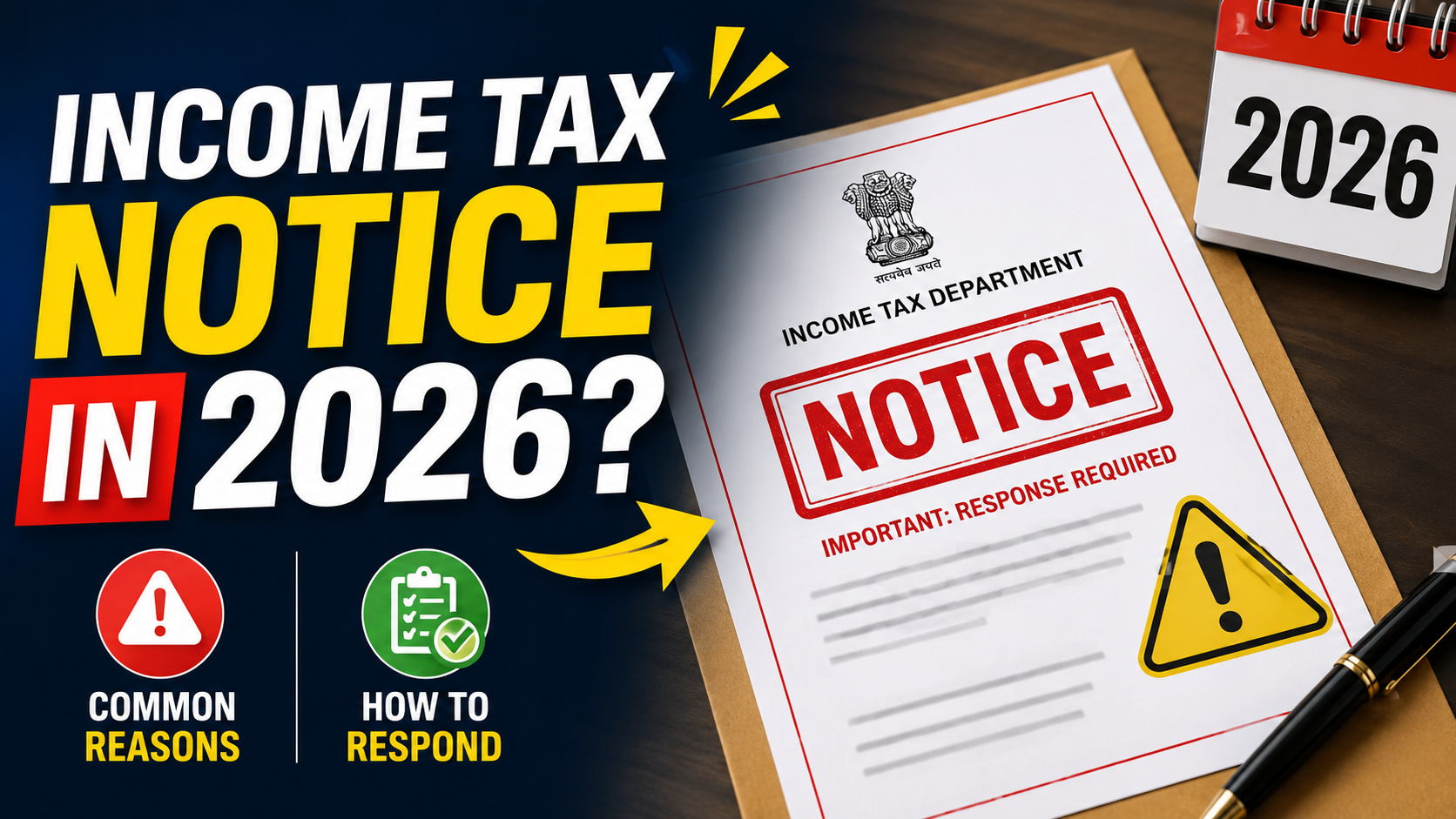
Receiving an Income Tax notice does not necessarily mean you have done something wrong. In many cases, notices are issued to seek clarification, request additional information, or correct discrepancies in your Income Tax Return (ITR). Understanding the reason for the notice and responding within the prescribed timeline can help resolve the matter smoothly.
What Is an Income Tax Notice?
An Income Tax notice is an official communication issued by the Income Tax Department to a taxpayer.
The notice may request:
- Additional information.
- Clarification regarding reported income.
- Verification of deductions.
- Confirmation of tax payments.
- Correction of discrepancies.
- Submission of supporting documents.
Some notices are routine and informational, while others may relate to assessments or compliance issues.
The key is to read the notice carefully and understand what action, if any, is required.
Should You Panic After Receiving an Income Tax Notice?
Absolutely not.
Many taxpayers become anxious as soon as they receive a notice from the Income Tax Department. However, most notices are issued for verification or clarification purposes and can often be resolved by providing accurate information within the specified time.
Ignoring a notice, however, may lead to additional proceedings, penalties, or delays in processing your return.
Common Reasons You May Receive an Income Tax Notice
1. Income Mismatch
One of the most common reasons for receiving a notice is a mismatch between the income reported in your ITR and the information available with the Income Tax Department.
Examples include:
- Salary mismatch
- Interest income not reported
- Dividend income omitted
- Rental income excluded
- Freelancing income not disclosed
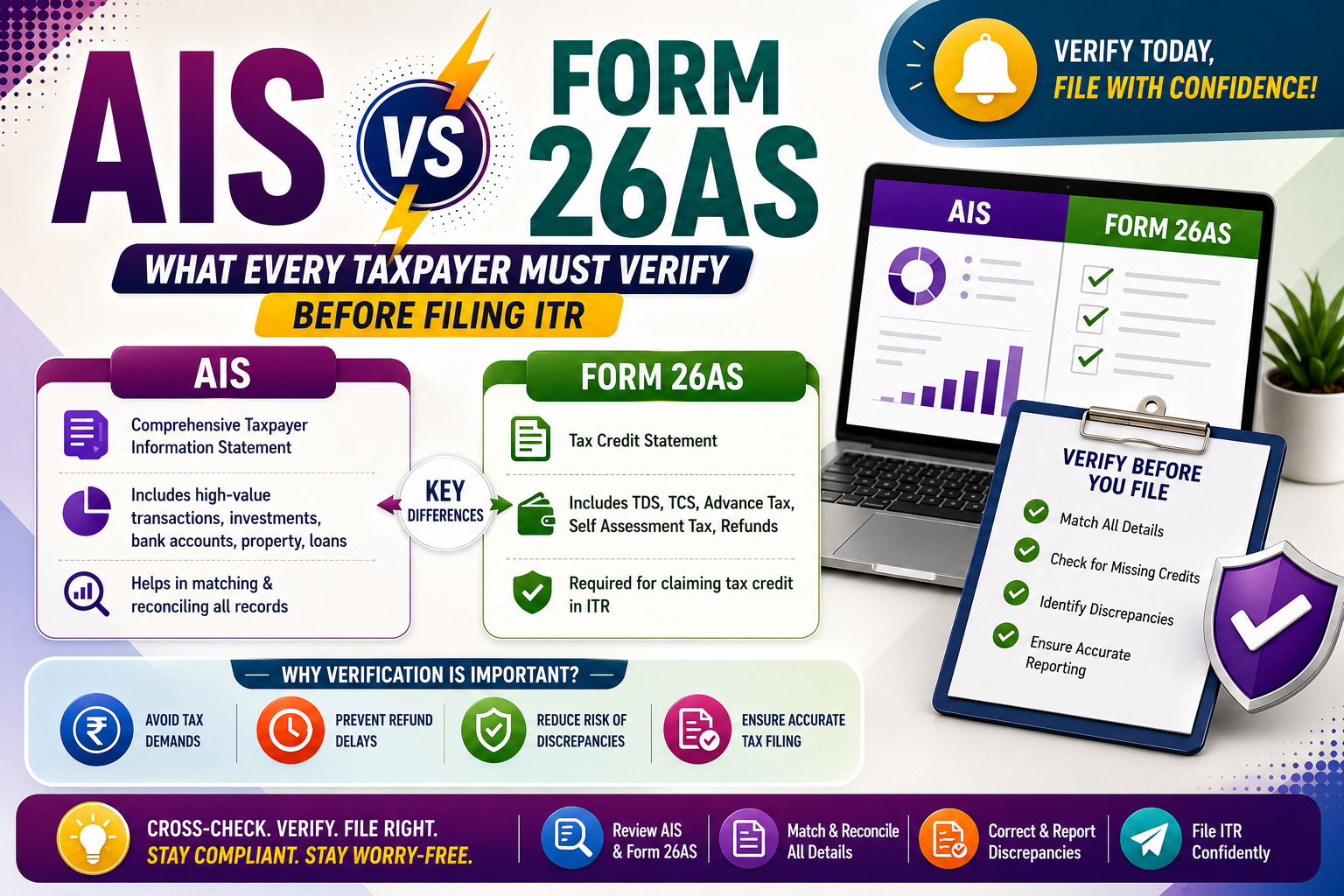
Reconciling your income with Form 16, AIS, and Form 26AS before filing helps reduce the risk of such notices.
2. Incorrect Deduction Claims
Claiming deductions that are unsupported or incorrectly calculated may attract verification.
Examples include:
- Section 80C
- Health insurance deductions
- Home loan deductions
- Donations
- Education loan interest
Always retain supporting documents for every deduction claimed.
3. High-Value Financial Transactions
Banks and financial institutions report certain specified transactions to the Income Tax Department.
Examples may include:
- Large cash deposits
- Significant property purchases or sales
- High-value investments
- Large credit card payments
- Securities transactions
If these transactions do not align with the income reported in your return, the Department may seek clarification.
4. TDS or Tax Credit Mismatch
A mismatch between your claimed tax credits and the records available in Form 26AS may trigger a notice.
Before filing, always compare:
- Form 16
- Form 26AS
- AIS
- TDS certificates
to ensure consistency.
5. Non-Filing of Income Tax Return
If you were required to file an Income Tax Return but failed to do so despite having taxable income or reportable financial transactions, you may receive a notice requesting compliance.
Timely filing helps avoid unnecessary notices and penalties.
6. Incorrect ITR Form
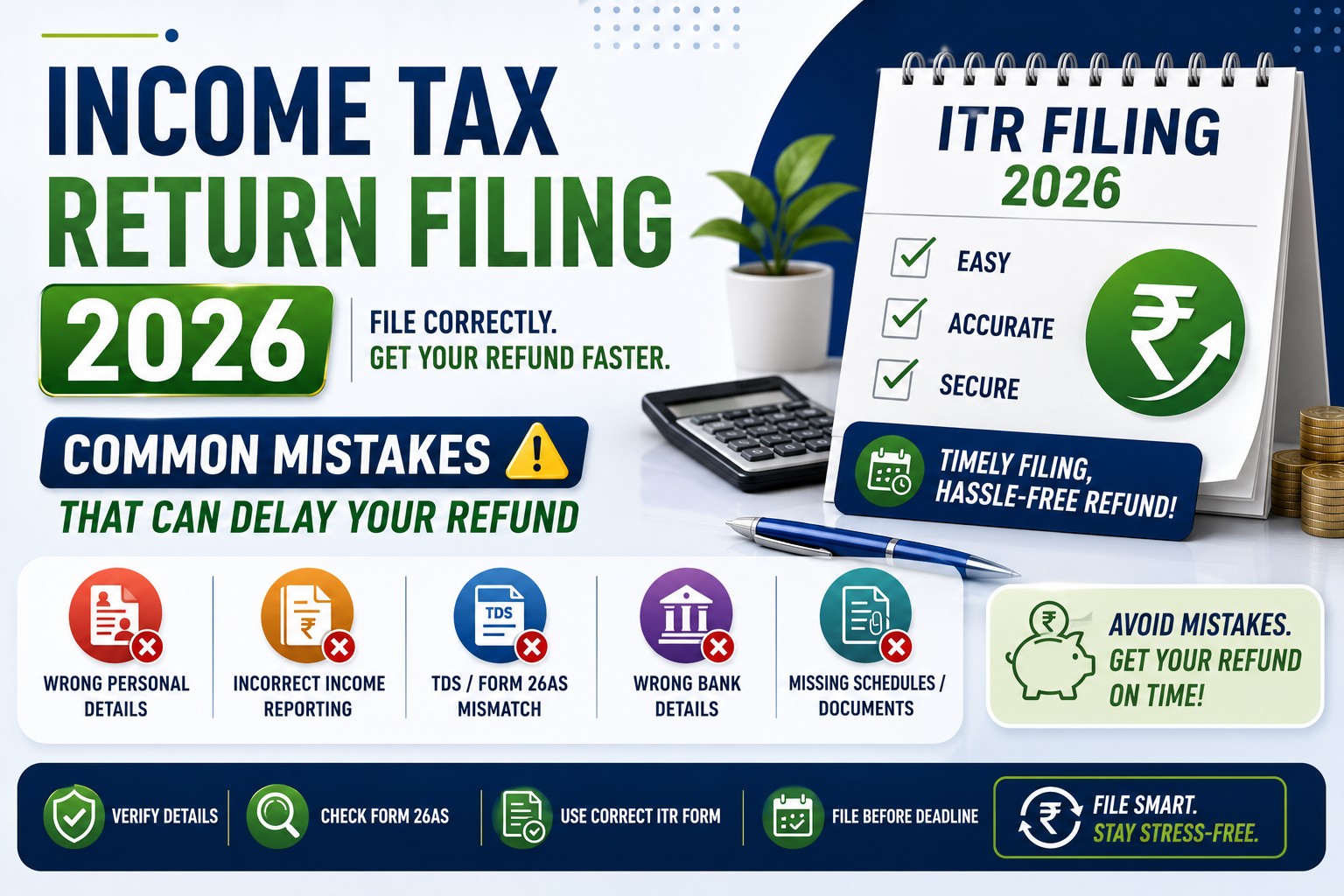
Using the wrong Income Tax Return (ITR) form is a common mistake that may lead to a defective return notice or a request for clarification.
For example:
- Filing ITR-1 despite having capital gains.
- Reporting business income using an incorrect ITR form.
- Not disclosing foreign assets or foreign income where required.
Always select the ITR form based on your income sources and taxpayer category.
7. Failure to Report Capital Gains
If you have sold:
- Shares
- Mutual funds
- Property
- Gold
- Bonds
during the financial year, you may need to report the resulting capital gains or losses in your Income Tax Return.
Failure to disclose these transactions, especially when they are reflected in the Annual Information Statement (AIS), may trigger a notice seeking clarification.
8. Errors in Personal Information
Simple mistakes in personal details can also lead to processing issues.
Verify the following before filing:
- PAN
- Aadhaar
- Name
- Date of Birth
- Mobile Number
- Email Address
- Bank Account Details
Incorrect information may delay communication or refund processing.
Types of Income Tax Notices
Not every notice has the same purpose. Understanding the nature of the notice helps you respond appropriately.
Intimation Notice
This notice is generally issued after the Income Tax Department processes your return. It may confirm that your return has been accepted or highlight differences between your filed return and the Department’s records.
Defective Return Notice
A defective return notice may be issued if your ITR contains missing information, incorrect details, or has been filed using the wrong ITR form.
Responding within the prescribed time helps prevent the return from being treated as invalid.
Scrutiny Notice
A scrutiny notice is issued when the Department requires additional information or supporting documents to verify specific aspects of your return.
Receiving a scrutiny notice does not automatically imply tax evasion or wrongdoing. It simply means the Department requires further clarification.
Demand Notice
If the Department determines that additional tax is payable after processing your return, a demand notice may be issued specifying the outstanding amount and the reason.
Review the notice carefully and verify the calculations before responding.
Reassessment Notice
A reassessment notice may be issued if the Department believes that certain income has not been assessed correctly, subject to the applicable provisions of the Income-tax Act.
Professional assistance is often advisable in such cases.
How to Respond to an Income Tax Notice
Receiving a notice is not the end of the process. A timely and accurate response is often sufficient to resolve the matter.
Step 1: Read the Notice Carefully
Understand:
- The reason for the notice.
- The relevant assessment year.
- The information or documents requested.
- The response deadline.
Avoid making assumptions before reviewing the details.
Step 2: Verify the Information
Compare the notice with:
- Your filed Income Tax Return.
- Form 16.
- Form 26AS.
- Annual Information Statement (AIS).
- Tax payment challans.
- Bank statements.
- Investment records.
Identify any discrepancies before responding.
Step 3: Gather Supporting Documents
Depending on the issue, you may need documents such as:
- Salary certificates.
- Interest certificates.
- Capital gains statements.
- Investment proofs.
- Home loan interest certificates.
- Rent receipts.
- Tax payment receipts.
Organizing these documents in advance helps ensure a complete response.
Step 4: Respond Within the Deadline
Most notices specify a timeline for submitting your response.
Missing the deadline may result in additional proceedings, penalties, or ex parte action. Always respond within the prescribed time or seek professional guidance if you require assistance.
Step 5: Keep Records
Maintain copies of:
- The notice received.
- Your response.
- Supporting documents.
- Acknowledgements and communication records.
These documents may be useful for future reference.
Common Mistakes to Avoid
When responding to an Income Tax notice, avoid these common errors:
- Ignoring the notice.
- Missing the response deadline.
- Providing incomplete information.
- Uploading incorrect documents.
- Responding without understanding the issue.
- Making unsupported claims.
- Filing a revised return without evaluating the implications.
- Assuming every notice indicates a penalty.
A well-prepared response is usually more effective than a rushed one.
When Should You Consult a Chartered Accountant?
While some routine notices can be handled independently, professional advice is recommended if the matter involves:
- High-value transactions.
- Capital gains.
- Business or professional income.
- Foreign assets or overseas income.
- Reassessment proceedings.
- Demand notices.
- Scrutiny proceedings.
- Multiple years under review.
A Chartered Accountant can assess the notice, prepare an appropriate response, and help ensure compliance with applicable tax laws.
Conclusion
An Income Tax notice is not always a cause for concern. In many cases, it is simply a request for clarification or verification of information already available with the Income Tax Department.
The key to resolving any notice is to understand its purpose, verify your records, respond accurately within the prescribed timeline, and maintain proper documentation.
Taking prompt action can help avoid unnecessary penalties, delays, and prolonged compliance issues.
Need Expert Help Responding to an Income Tax Notice?
If you have received an Income Tax notice or need assistance with tax compliance, Bharat A. Choudhary & Co. is here to help.
Our experienced Chartered Accountants provide end-to-end support for:
- Income Tax Notice Responses
- Scrutiny & Assessment Assistance
- Revised & Updated Returns
- Tax Planning
- Income Tax Return Filing
- Capital Gains Reporting
- Tax Compliance Advisory
- NRI Taxation
Schedule a consultation today for professional guidance and timely resolution of your tax matters.
6. FAQ SECTION
1. Why did I receive an Income Tax notice?
An Income Tax notice may be issued due to income mismatches, incorrect deduction claims, high-value transactions, tax credit discrepancies, non-filing of ITR, or for routine verification.
2. Is receiving an Income Tax notice a serious matter?
Many notices are issued for routine verification or to request additional information. However, it is important to read the notice carefully and respond within the specified timeline to avoid further proceedings.
3. What happens if I ignore an Income Tax notice?
If a taxpayer fails to respond within the prescribed time, the Income Tax Department may proceed based on the information available, which could result in adverse consequences. Timely compliance is essential.
4. Can salaried employees receive Income Tax notices?
Salaried taxpayers may receive notices for reasons such as income mismatches, incorrect deduction claims, unreported interest income, capital gains, or discrepancies in TDS details.
5. Can I respond to an Income Tax notice online?
Many notices can be responded to electronically through the Income Tax e-Filing portal. Ensure that you upload the required documents and provide complete and accurate information within the specified deadline.
6. Do I need a Chartered Accountant to reply to a tax notice?
It depends on the complexity of the notice.
7. How can I avoid receiving an Income Tax notice?
Before filing, compare your Form 16, Form 26AS, AIS, bank statements, and investment records. Report all taxable income, claim only eligible deductions, and verify personal details to reduce the likelihood of discrepancies.
8. How long do I have to respond to an Income Tax notice?
Each notice specifies its own response deadline. Taxpayers should carefully review the notice and submit the required information within the prescribed timeframe to avoid additional action.