
Coca-Cola launches ad campaign with Domino’s, Wendy’s, Wingstop
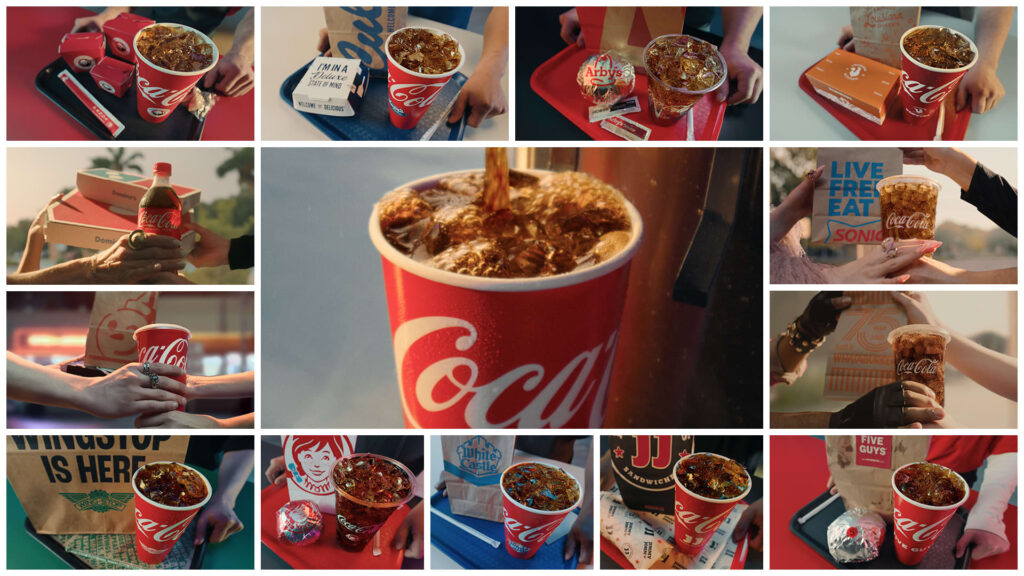
[ad_1] Coca-Cola on Thursday unveiled a new marketing campaign to boost sales of its soda at restaurants as declining traffic and sluggish sales growth challenge both the industry and its top beverage supplier. The campaign marks the first time Coke has released ads featuring multiple restaurant partners. The commercials flash across different consumers ordering their meals at a medley of chains, all ending their orders with the same phrase, “And a Coke.” Across the three spots released Thursday, 13 different chains share the spotlight: Arby’s, Culver’s, Domino’s Pizza, Five Guys, Jack in the Box, Jimmy John’s, Panda Express, Popeyes, Sonic, Wendy’s, Whataburger, White Castle and Wingstop. For restaurants, drinks — even a simple Coke — are high-margin menu items, helping lift profits in an industry known for its razor-thin margins. That sale becomes even more important as consumers cut back on restaurant visits and spend less when they do dine out. In February, traffic to U.S. restaurants fell 2%, according to data from Black Box Intelligence. And 38% of consumers said they were spending less at restaurants during the first quarter of 2026, based on a survey conducted by Revenue Management Solutions. Behind the scenes, Coke has also been trying to help boost restaurant sales amid the spending slowdown. As the so-called value wars kicked off among fast-food chains in 2024, Coke executives said that the company had teamed up with restaurant partners to market combo meals with drinks to drive traffic and beverage sales; CNBC previously reported that Coke threw in marketing funds to make a $5 value meal more attractive to McDonald’s U.S. franchisees. Coke chose the chains in its new campaign based on the different cuisines and the occasions they represent, like late-night pickup or drive-thru, according to Dagmar Boggs, Coke’s North American president of foodservice and on-premise. The commercials will air in movie theaters starting Friday. By mid April, the campaign will spread to linear TV, digital channels and third-party delivery providers like UberEats and DoorDash. The chains did not pay Coke to participate in the advertisements. Boggs called it “the perk of being a partner with Coca-Cola.” Boggs describes Coke as a “business partner” rather than a “beverage supplier” for restaurants, giving insight and marketing suggestions to chains like Burger King or Wendy’s. Of course, higher Coke sales at restaurants will also benefit the beverage giant. Coke does not publicly disclose how much of its sales come from restaurants. However, executives have previously said that about half of its overall sales come from away-from-home channels, which also include movie theaters, airplanes and amusement parks. Coke’s food service business also serves a bellwether for consumer sentiment. “If food service catches a cold in the North America operating unit, North America will catch a cold,” Boggs said. “That’s why we are always looking to grow our partners’ business, because when they grow, we grow.” In 2025, Coke’s North American organic sales rose 4%, but its domestic unit case volume fell 1%, a signal of weaker demand for its drinks. The company is projecting modest sales growth in 2026, according to the outlook it released in early February. Choose CNBC as your preferred source on Google and never miss a moment from the most trusted name in business news. [ad_2] Source link
Delta Air Lines Q1 2026 earnings
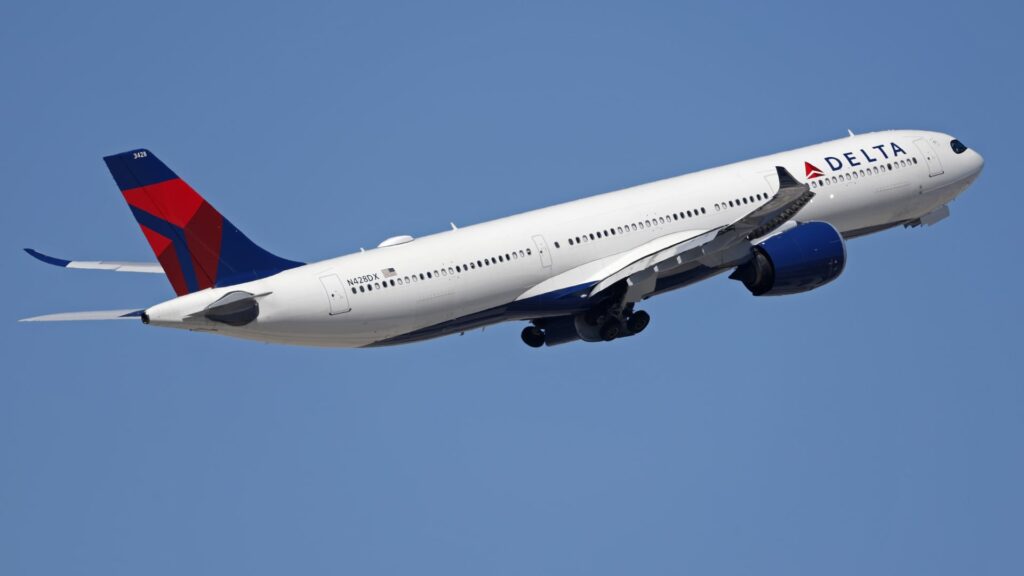
[ad_1] Delta Air Lines CEO Ed Bastian said the carrier will “meaningfully reduce” its capacity growth plans in the near term as fuel costs soar, solidifying a pullback from airlines that have been roiled by a historic run-up in jet fuel due to the Middle East war. Delta on Wednesday forecast adjusted per-share earnings of $1 to $1.50 in the second quarter, below the $1.52 a share analysts were expecting, with revenue up in the “low-teens” percentage points compared with a year earlier, above the roughly 10% Wall Street forecast. Capacity will likely be flat on the year, Delta said. Here’s what Delta reported for the first quarter compared with what Wall Street was expecting, based on consensus estimates from LSEG: Earnings per share: 64 cents adjusted vs. 57 cents expected Revenue: $14.2 billion adjusted vs. $14 billion expected Delta is the first of the major U.S. airlines to report first-quarter results, though United Airlines, Delta and others had already been trimming capacity for the quarter. Less capacity can mean higher airfare, which is already on the rise. Delta also joined JetBlue Airways and United in raising its checked bag fees on Tuesday. Carriers around the world are more even more affected by the rise in fuel costs because of their countries’ reliance on imports and have added fuel surcharges or announced fare increases. Bastian said demand remains strong, despite the higher travel costs, and that Delta’s customer base continues to spend on travel, particularly for higher-end products like more spacious seats. Speaking to reporters, Bastian said it isn’t clear if or when customers will pull back. Delta owns a refinery where it turns crude oil into jet fuel and other products, like gasoline and diesel, giving it an advantage over other carriers. “We we don’t know what where fuel is going to go, but to the extent fuel stays elevated, that refinery will continue to help us,” Bastian told reporters. Delta expects to post $1 billion in pre-tax profit in the second quarter and receive a $300 million benefit from its refinery, the carrier said, a major tailwind for the facility near Philadelphia that it acquired in April 2012 from Phillips 66. The rise in jet fuel prices since the U.S. and Israel attacked Iran on Feb. 28, has been sharper than the run-up in crude oil. Jet fuel prices in major U.S. cities were up nearly 88% since Feb. 27, through April 6, according to Airlines for America industry group, citing Argus data. Delta expects all-in fuel costs of $4.30 per gallon in the second quarter. Bastian said the airline isn’t walking back its full-year forecast but isn’t updating it either because of uncertainty of fuel prices. Delta projected potentially record earnings this year when it released its last earnings in January. “As we gain more knowledge of the impact of the duration of the fuel spike over the course of the next couple months, we’ll be in a better position,” Bastian said. Oil futures were sharply lower on Wednesday after President Donald Trump said Tuesday that he agreed to suspend planned attacks on Iranian infrastructure for two weeks, backing off of threats to imminently order the destruction of Iran’s “whole civilization,” and Iran agreed to open the key Strait of Hormuz shipping channel. Meanwhile, premium travel demand continues to drive results. Delta said premium-ticket revenue, from first class and other more expensive options compared with coach, was up 14% in the first quarter over last year. Main cabin revenue increased for the first time since late 2024. Capacity, however, fell 3% in the first three months of 2026 compared with last year “as continued investment in fleet renewal drove premium seat mix higher.” the company said. Rival United, the second-most profitable U.S. carrier, has been trying to increase its premium-seat footprint, investing in new onboard technology, new suites and other perks. “I think they’re smart trying to copy us,” Bastian said. Bastian said that Delta did see a pullback in some business travel during the hourslong Transportation Security Administration lines at airports last month due to the partial government shutdown but that travel segment appears to have recovered. For the first quarter, Delta reported net income of $423 million, or 64 cents a share, up from $291 million, or 45 cents a share, during the same period last year. Adjusting for one-time items, Delta reported 64 cents a share for the first quarter, ahead of the 57 cents analysts expected. Revenue, adjusted for third-party sales from its refinery and other items, rose more than 9% to $14.2 million in the first quarter. [ad_2] Source link
Family offices stall deal-making during Iran conflict

[ad_1] Azim Premji, Founder Chairman of Wipro, speaks during the inauguration of the Wipro Hydraulic Plant in Jaipur, Rajasthan, India, on Aug. 22, 2024. Vishal Bhatnagar | Nurphoto | Getty Images A version of this article first appeared in CNBC’s Inside Wealth newsletter with Robert Frank, a weekly guide to the high-net-worth investor and consumer. Sign up to receive future editions, straight to your inbox. Investment firms of ultra-wealthy families dialed back their deal-making in March as the Iran conflict rattled the market. Family offices made 39 direct investments in companies last month, a 25% drop from February when adjusted for month length, according to data provided exclusively to CNBC by Fintrx, a private wealth intelligence platform. That said, the family offices that are still inking deals are making bold bets. A quarter of last month’s investments were part of mega-rounds, or fundraises in excess of $100 million, according to Fintrx. In March, Jeff Bezos‘ namesake family office co-led a $1.03 billion seed round for Advanced Machine Intelligence. Also known as AMI Labs, the new startup is training artificial intelligence models on real-world sensory data, rather than text. Other boldface-name billionaires such as ex-Google CEO Eric Schmidt and serial entrepreneur Mark Cuban also participated in the fundraise. This trend of making fewer but larger deals is also playing out with corporate investors. This past quarter, the total value of global mergers and acquisitions activity rose by 26% compared with the same quarter last year to $1.2 trillion, but the number of deals fell by 17%, according to data from LSEG. The second week of March was the worst week for global M&A in over a year, falling below $33 billion, LSEG found. However, some family offices continue to be prolific dealmakers. In March, Indian billionaire Azim Premji’s family office made at least four direct investments in companies, according to Fintrx. Premji Invest’s largest round, which it also led, was a $450 million Series A for Rhoda AI, another startup developing novel ways to train artificial intelligence models. Rhoda AI aims to train industrial robots on hundreds of millions of videos. Kleiner Perkins billionaire John Doerr also backed the round. Get Inside Wealth directly to your inbox Choose CNBC as your preferred source on Google and never miss a moment from the most trusted name in business news. [ad_2] Source link
Starbucks to award bonuses to baristas, expand tipping
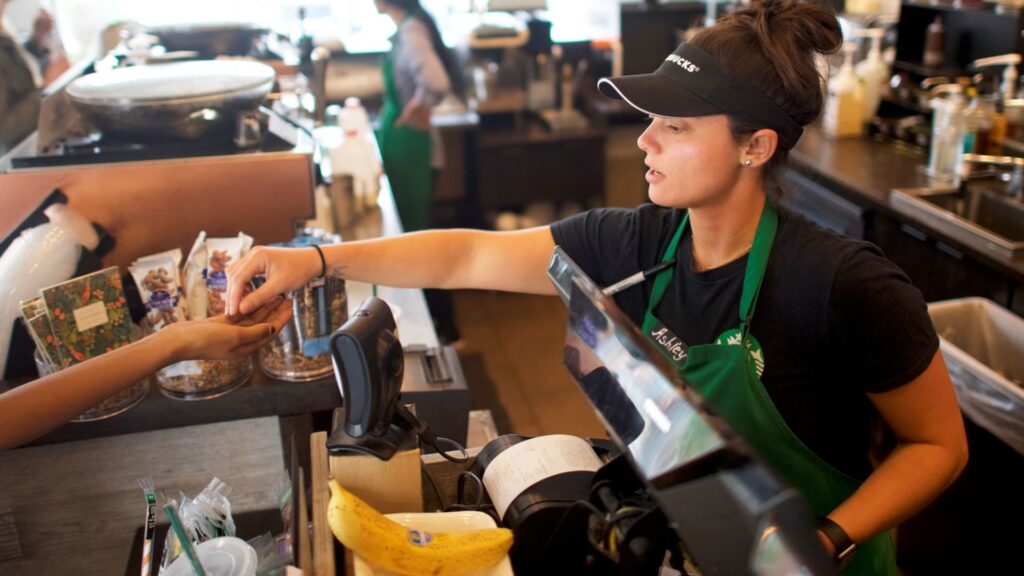
[ad_1] A Starbucks barista fulfills an order in a South Philadelphia store. Mark Makela | Reuters Starbucks will award baristas and shift supervisors quarterly bonuses of $300 if their stores hit certain targets to aid the coffee chain’s turnaround efforts, the company said Thursday. The program will begin in July, with the first payout coming in the fall to store employees who meet or exceed specific sales, operational and customer service metrics, Starbucks Chief Operating Officer Mike Grams and Chief Partner Officer Sara Kelly wrote in a memo to employees on Thursday. However, baristas at locations represented by Starbucks Workers United likely will not see the quarterly bonuses until Starbucks and the union reach a collective bargaining agreement. “This new program, at the approximately 5% of U.S. locations where partners have a union, will be subject to collective bargaining as required by federal law,” Grams and Kelly said in the letter. Negotiations between Starbucks and union have been at a standstill for more than a year. In March, the company said that it had proposed to resume in-person bargaining with Workers United. Talks between the two parties are expected to resume this month. Under CEO Brian Niccol, Starbucks has been undergoing a turnaround focused on getting “back to Starbucks.” Much of the strategy has centered on improving the customer experience, from making its cafes cozier to requiring baristas to write messages on cups. But the turnaround plan also hinges on its baristas and their willingness to carry out Niccol’s vision. Starbucks has tried to improve the barista experience, with improved staffing and plans to add assistant managers to most North American locations this year. More changes are ahead for baristas. The company also announced on Thursday that it will give customers more methods to tip their baristas. Anyone who orders and pays through the mobile app will be able to tip, as well as customers who scan the app at the register to pay. Combined with the new bonuses, baristas could see their pay rise as much as 8% as a result, according to the company. Additionally, all Starbucks U.S. employees will be paid on a weekly basis, starting in August. Currently, most baristas receive their paychecks every other week, depending on local labor laws. So far, the “Back to Starbucks” strategy is starting to pay off for for the company. Last quarter, the chain reported traffic growth for the first time in two years. Choose CNBC as your preferred source on Google and never miss a moment from the most trusted name in business news. [ad_2] Source link
Regional sports networks are faltering even as ratings soar

[ad_1] Los Angeles Dodgers pitcher Yoshinobu Yamamoto and actor and musician Donald Glover greet Nintendo’s Yoshi after the ceremonial first pitch before a baseball game against the Cleveland Guardians at Dodger Stadium in Los Angeles, March 31, 2026. Ryan Sirius Sun | Getty Images Sport | Getty Images A group of regional sports networks is set to wind down, marking the demise of a once-lucrative business and leaving the fate of local baseball, basketball and hockey broadcasts in the balance — even as live sports command the highest TV ratings. RSNs have felt arguably the greatest pressure from the losses that plague the pay TV bundle as consumers switch to streaming. Now, the model is in rapid decline. Last week, as the 2026 MLB season got underway, the league announced it was taking over media distribution for 14 teams. In large part, this was the result of the inevitable wind down of Main Street Sports — formerly Fox Sports networks, which have been through different owners since 2019 and several name changes since 2021. Main Street emerged from bankruptcy protection in late 2024, and despite touting subscriber growth as recently as last spring, the operator faced another liquidity crunch earlier this year when MLB rights payments were due, according to people familiar with the matter, who asked not to be named because they were not authorized to speak publicly. Main Street owned roughly 15 channels, but at one point aired 30 MLB, NHL and NBA teams after exiting bankruptcy. Though the company was in sale talks earlier this year with the likes of streaming platforms DAZN and Fubo, the discussions never amounted to a deal, according to the people. Rumors of liquidation circulated — in the middle of the NBA and NHL seasons — but Main Street has so far been able to stave that off. Instead, MLB teams went their separate ways at the beginning of the season, with some shifting to MLB distribution and some, like the Los Angeles Angels and Atlanta Braves, taking over the production and distribution of their own regional channels. The NBA and NHL regular seasons are expected to be completed through their current Main Street-owned networks — now branded as FanDuel Sports networks. But after the NBA regular season and the first round of the NHL playoffs, Main Street plans to begin an earnest end-of-business process, one of the people said. The future for the remaining NBA and NHL teams are yet to be determined, although some are likely to find homes with broadcast station owners that have been acquiring local rights, such as Scripps, according to a person close to the negotiations, who asked not to be named because the matter is confidential. And the end of the RSN model doesn’t stop there. Get the CNBC Sport newsletter directly to your inbox The CNBC Sport newsletter with Alex Sherman brings you the biggest news and exclusive interviews from the worlds of sports business and media, delivered weekly to your inbox. Subscribe here to get access today. The fees long paid by the networks to host games have propped up professional sports leagues for a long time — especially MLB, known to have some of the most expensive rights fees and the most local games. The upending of the RSN model is sure to send ripple effects throughout these teams. Those that have already exited the RSN model have sought refuge in direct-to-consumer streaming apps, which are pretty expensive monthly or annual costs for fans, and through agreements with broadcast station owners, which argue they offer the widest reach of any platform for sporting events. There’s also been an increased emphasis on advertising, but while that revenue stream is helpful when it comes to the NBA and NHL, it doesn’t go as far to support MLB, according to industry insiders. There’s also been little, if any, crossover for MLB teams to the affiliate networks, once again because of the expense and number of games, according to people familiar with the matter, who asked not to be named because they were not authorized to speak publicly. Going it alone While not every channel is made equal, even those airing games for big-market teams are facing the same pressures as the Main Street-owned channels — just not as severely. Last year MSG Network, which airs games for the NBA’s New York Knicks as well as the NHL’s New York Rangers, Buffalo Sabres and New Jersey Devils, was facing financial turmoil as it needed to refinance a whopping debt load and dealt with a carriage dispute that resulted in a blackout for nearly two months. Bankruptcy was reportedly on the table until the James Dolan-owned company refinanced its debt. Also in the New York-area, SNY, the regional home of the New York Mets, had been exploring its options in the past year, including a sale, according to people familiar with the matter, who asked not to be named because the discussions are private. While no deal was ever reached, some of the people said Mets owner Steve Cohen was part of the discussions at one point as a potential acquirer. The network, which is majority backed by former Mets owners the Wilpon family, has also counted Comcast and Charter Communications as investors for some time. But in recent months, Comcast sold its stake to Charter for an undisclosed amount, according to people familiar with the matter, who asked not to be named because the deal is confidential. Comcast owns a handful of networks but has been slowly inching away from the RSN world. Comcast has also been one of the toughest distributors for RSNs to deal with recently, pushing to move the networks into the tiered model. That would mean subscribers would opt in for the local channels rather than automatically receiving them — and automatically paying for them. This had been a sticking point in Comcast’s carriage negotiations last year with the YES Network — a top-tier RSN with some of the highest fees and biggest audiences, as it airs New York Yankees and Brooklyn
Blue Owl private credit funds redemptions capped at 5% after steep requests
[ad_1] Blue Owl is experiencing elevated redemption requests for two of its private credit funds, according to letters to shareholders issued Thursday. The firm’s flagship OCIC fund, with about $36 billion in assets under management, received redemption requests of about 21.9% of shares outstanding during the first quarter, the firm said. Blue Owl’s smaller, tech-oriented fund, OTIC, received redemption requests of 40.7% during the same period, it said. In both of the funds, Blue Owl opted to cap requests at 5%. Blue Owl attributed the higher-than-usual requests to “heightened market concerns around AI-related disruption to software companies.” “We continue to observe a meaningful disconnect between the public dialogue on private credit and the underlying trends in our portfolio,” Blue Owl said in the shareholder letters. The private credit industry has been roiled in recent months by concerns that it is overexposed to the software industry – an area that’s been under pressure over fears of disintermediation from artificial intelligence. Software represents about 20% of portfolio exposure among business development companies, known as BDCs (a publicly traded proxy for private credit), according to Jefferies. Headline fears about default risk in the sector have driven a small but wealthy group of institutional investors to seek the exits from many of these funds. “As public market dislocations and AI-related uncertainty reshape sentiment, dispersion is increasing across the sector, creating opportunities for experienced lenders to deploy capital selectively at improved terms,” the technology-focused letter reads. Blue Owl, which is unique in having two of these nontraded private credit funds, is also among the last to report redemptions. The firm’s percentage of redemptions is multiples higher than its peers. Most firms have opted to use the 5% cap, but some, including Cliffwater and Blackstone allowed slightly more redemptions. Blue Owl’s OTIC technology fund saw redemption requests of 17% in the fourth quarter, which it fulfilled. OCIC’s requests were 5% in the fourth quarter. The two funds previously drew interest from hedge funds Saba and Cox, which extended tender offers to locked-up holders at a steep discount. Blue Owl said in the most recent quarter, its tech fund’s redemption requests were amplified by a more concentrated shareholder base, particularly within certain wealth channels and regions. For its flagship fund, the firm said the activity was driven by a “small minority of the investor base,” with 90% of shareholders electing not to tender. Both funds saw gross inflows, which combined with the 5% gates resulted in modest net outflows. Choose CNBC as your preferred source on Google and never miss a moment from the most trusted name in business news. [ad_2] Source link
Trump prepares pharmaceutical tariffs of up to 100%
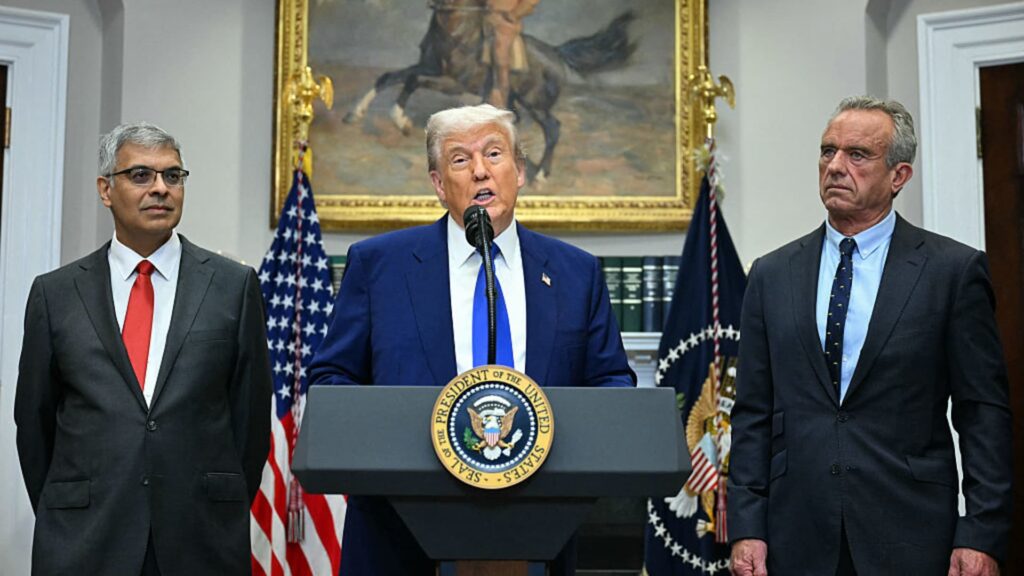
[ad_1] The Trump administration on Thursday imposed new tariffs on branded drugs from pharmaceutical companies that have not struck deals with the president to lower their U.S. drug prices — a long-awaited move that will likely only affect a small portion of drugmakers. “We need to make sure that our drug supply is protected, secure and domestic,” a senior administration official, who declined to be named, told reporters on Thursday. “That is what we’re doing.” Also on Thursday, the Trump administration changed how tariffs are calculated on imported raw materials made from steel, aluminum, and copper, and on imported products that contain those metals. Patented medications and their active ingredients face a 100% tariff under the pharmaceutical plan, but there are pathways for drugmakers to reduce or avoid the levies, the official said. The administration will impose a 20% tariff on companies that plan to onshore production, which would increase to 100% four years from now. Drugmakers that have fully executed drug pricing deals or are currently negotiating with the Health and Human Services Department and are building manufacturing domestically would be exempt from the tariffs. New domestic plants must be completed by January 2029 to qualify, the official said. Larger drugmakers have 120 days before the 100% tariff rate goes into effect, the official said, but the administration expects more companies to announce reshoring plans before then. Smaller drugmakers, which rely on contract manufacturers, have 180 days before that rate hits. Meanwhile, some countries that have struck larger trade deals with the U.S. will face different pharmaceutical levies, with a 15% rate in the European Union, Japan, Korea and Switzerland. The U.K. will face a 10% tariff, in part because its government has raised the price of what it will pay for pharmaceuticals, the official said. “Those countries, the production can stay in those countries because they’ve made a bigger trade deal with America,” the official said. Genetic products, biosimilars and related ingredients are not subject to tariffs at this time, but that will be reassessed in one year, the White House said in a fact sheet. Certain specialty pharmaceutical products, including those for animal health and treatments for rare conditions, will be exempt from levies if they come from countries with trade deals or “meet an urgent public health need,” the fact sheet said. The plan represents another shift in Trump’s aggressive trade strategy, more than a month after the Supreme Court struck down the global levies he imposed in 2025, which excluded the pharmaceutical industry. The sector-specific tariffs follow a Commerce Department investigation that determined certain pharmaceutical imports pose a national security risk to the United States. US President Donald Trump (C), alongside Secretary of Health and Human Services Robert F. Kennedy Jr. (R) and National Institute of Health (NIH) Director Jayanta Bhattacharya (L), speaks during a news conference about prescription drug prices, in the Roosevelt Room of the White House on May 12, 2025, in Washington, DC. Jim Watson | Afp | Getty Images Since November, more than a dozen major drugmakers, including Eli Lilly, Pfizer and Novo Nordisk, have inked deals with Trump to lower the prices of new and existing medicines. Those agreements are part of the president’s “most favored nation” policy, which ties U.S. drug prices to cheaper ones abroad, and exempts the companies from tariffs for three years. The Trump administration official said 13 companies have already signed a drug pricing agreement, while negotiations with another four drugmakers are progressing. There are already $400 billion in commitments to reshore manufacturing so far in the sector during Trump’s term, the official added. Prior to the landmark drug pricing deals, Trump repeatedly threatened duties on pharma imports. Those threats – and efforts to get into the president’s good graces – fueled a new wave of U.S. manufacturing investments from the pharmaceutical industry. Those commitments come at a time when domestic drug manufacturing had shrunk significantly. In the separate tariff action related to metals, the duty remains at 50% on raw material made from steel, aluminum and copper — such as aluminum sheets or steel coils — but it will be on the full price paid by U.S. importers. The senior administration official, during a call with reporters on Thursday, said the adjustment is being made to prevent foreign sellers from undervaluing their products to pay less in tariffs. Imported finished products containing more than 15% of those metals will now be subject to a 25% tariff on the total value of the item. The prior duty was 50% only on the value of the metal in the product. Finished products that contain less than 15% of those metals will not be subject to a tariff. A senior administration official said the changes in tariffs on the metals should not affect the cost of goods, but non-government estimates suggest that it will modestly raise the effective duty rate. The Committee for a Responsible Federal Budget estimates that the change will raise an additional $70 billion in federal revenue over the next 10 years. — CNBC’s Megan Cassella contributed to this article. Choose CNBC as your preferred source on Google and never miss a moment from the most trusted name in business news. [ad_2] Source link
Trump tariffs fall, but trade war impacts linger
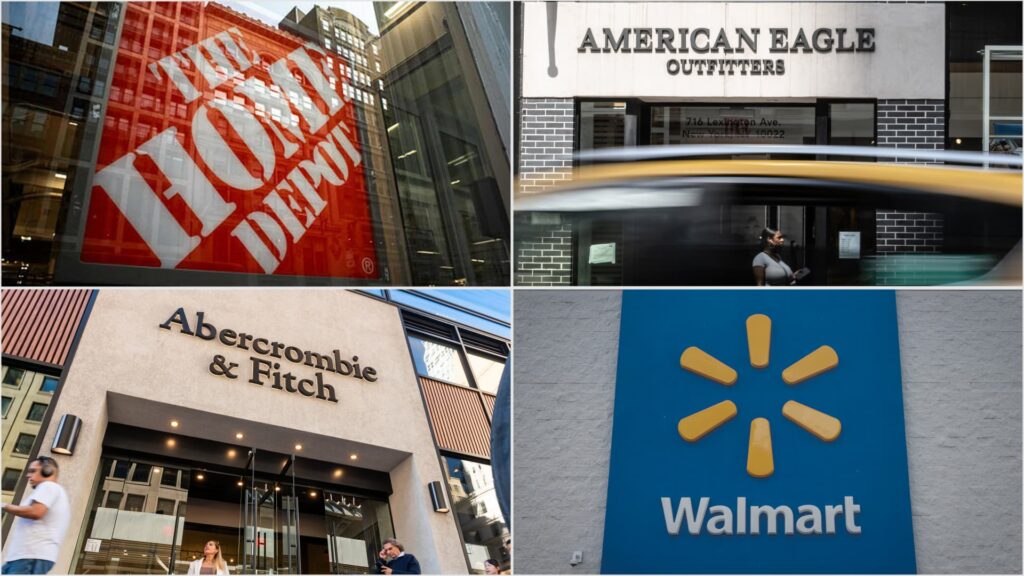
[ad_1] A year after President Donald Trump declared his “liberation day” and imposed sweeping tariffs on imports, kicking off a wave of economic and political uncertainty, some companies are still feeling the effects. While some industries have emerged largely unscathed — having weathered twists and turns of several tariff iterations — others, such as retail, automotive, consumer packaged goods and pharmaceuticals, are navigating a new reality in global supply chains. “Leadership at U.S. corporations really had to think about where we buy from versus whether we can import or not,” said Venky Ramesh, a supply chain expert with AlixPartners. “Around 80% to 85% of the costs were absorbed domestically, meaning either the U.S. corporations had to take the hit, or they passed it on to the customers, or a mix of both.” On April 2, 2025, in the White House’s Rose Garden, Trump announced broad country-by-country tariffs, as well as a 10% baseline levy on countries that weren’t specifically listed in that declaration. Those tariff policies fluctuated wildly over the following months as Trump made deals and walked back some of the most extreme duties. With ever-changing trade and tariff policies, companies have been forced to be more flexible and diversify their supply chains over the past year. Moving operations out of countries such as China, Vietnam or Mexico meant import cost savings, but for many industries, it was a tall task. Ramesh said he saw clients in the first few months making “aggressive” changes to get ahead of the tariff costs, but because those policies kept shifting, companies begin to move slower and invest resources into scenario modeling. “Moving supplier bases cannot happen overnight,” Ramesh said. “I think what companies are doing is they’re taking it gradually, so they want to make sure that they are well-diversified.” On Feb. 20, the Supreme Court ruled that the country-specific “reciprocal” tariffs Trump imposed under the International Emergency Economic Powers Act of 1977, or IEEPA, were unconstitutional. But hours after the ruling, Trump announced a new “global tariff” rate of 10% under a separate statute, Section 122 of the Trade Act of 1974, for a period of 150 days. He later said he would increase global tariffs to 15%. Meanwhile, those imposed under Section 232 of the Trade Expansion Act of 1962 — intended to target specific imports that threaten national security — remain in place. Section 232 tariffs largely affected imports of steel, semiconductors, aluminum and other products. Still, Ramesh said, overall imports into the U.S. in 2025 were actually higher than in the previous year, especially as companies pulled forward inventory in the first few months of the year. Ultimately, he said, he believes the past year of tariffs has culturally shifted the way U.S. companies operate. “The things that would stick are supply chain being a very, very critical component of any company. I think that has really changed over the last year,” he said. “Corporations are not going to make the rash decisions. They’re not as susceptible to these changes as they were a year ago. They’ve stabilized more.” As the U.S. enters its second year of Trump-imposed tariffs, here’s how some of the consumer-facing sectors have fared. Retail Eduardo Munoz Alvarez | Corbis News | Stephanie Keith | Bloomberg | Spencer Platt | Erik McGregor | Lightrocket | Getty Images One year into Trump’s trade war, the retail industry has been disproportionately affected by tariffs. Mega-retailers such as Walmart, which have a range of different revenue streams and deep negotiating power, have emerged relatively unscathed, while smaller businesses have been crushed. Several retailers said that although they initially estimated they would see significant hits to revenue and profitability after the new tariffs were imposed, they’ve since taken a new approach, aiming to not rely too heavily on any single country for imports or manufacturing. And, for the most part, they’ve managed to avoid the massive impact that many projected at the start of the trade war. Home Depot‘s chief financial officer, CFO Richard McPhail, told CNBC in late February that the company is pressing ahead with its goal of limiting any one country outside the U.S. to 10% of the company’s purchases. More than half of what Home Depot sells is sourced in the U.S. The retail supply chain has been forced to become more nimble in the past year, according to Max Kahn, the president of Coresight Research. “One of the things that really started back with the pandemic is that retailers have become much better at building flexibility in their supply chains, and that got accelerated a lot last year with tariffs,” Kahn said. “Shocks to the system or unexpected events are a little bit more business as usual now.” Tariffs have also meant higher costs for shoppers. Retailers such as Walmart, Best Buy and Macy’s have raised prices of some items, while also looking for ways to defray costs. But as retailers reported quarterly earnings over the past few months, executives were hesitant to declare victory in the tariff back-and-forth. While the Supreme Court’s decision earlier this year was largely a boon, especially for apparel companies that rely primarily on supply chains throughout East Asia, there’s still a lot of uncertainty, and companies were mixed on whether, and how, to size up the potential tariff impact. Abercrombie & Fitch in March decided to explicitly incorporate the latest 15% tariff assumption into its outlook, becoming one of the first retailers to provide clarity on the new guidelines. However, the company did not predict or quantify any potential tariff refunds that it may receive after the IEEPA tariffs were struck down. On the other hand, American Eagle Outfitters said in March that its guidance for the first quarter and full year was based on tariffs imposed under the IEEPA guidelines and did not take into account the recent Supreme Court ruling. Gap also didn’t factor recent changes to tariffs into its 2026 outlook, but it could issue stronger guidance in the upcoming quarter because the
United Airlines hikes checked bag fees by $10 as fuel prices climb
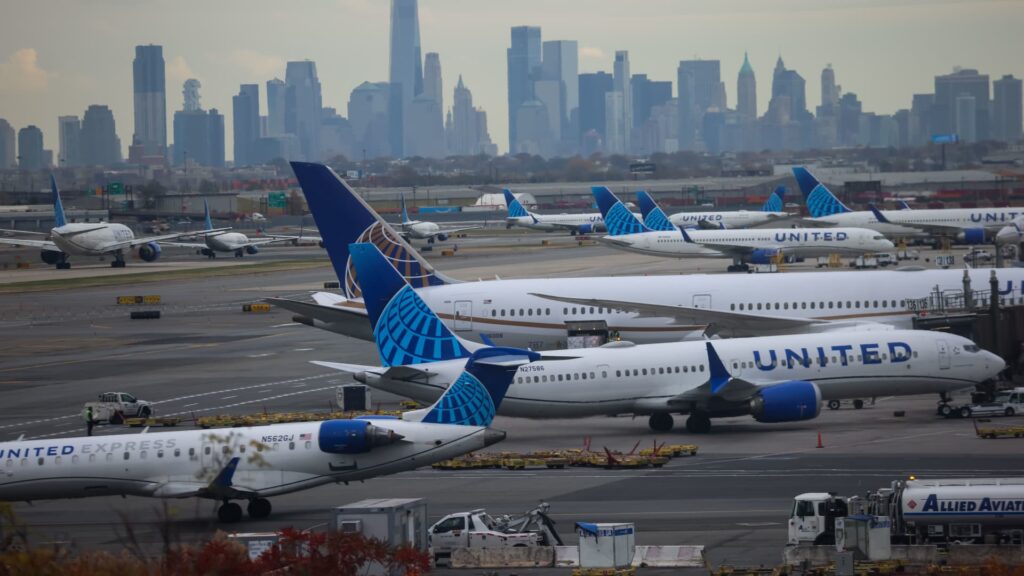
[ad_1] United Airlines Bloomberg | Bloomberg | Getty Images United Airlines hiked its checked bag fee by $10 on Thursday, becoming the second U.S. carrier in less than a week to raise the fee as the industry grapples with this year’s surge in fuel costs, airlines’ biggest expense after labor. United’s new fee will be $45 to check a first bag on most domestic itineraries if the traveler pays ahead of time and $50 if they pay within 24 hours of their flight. “United is raising first and second checked bag fees by $10 for customers traveling in the U.S., Mexico and Canada and Latin America beginning with tickets purchased Friday, April 3,” the carrier said. United last raised checked bag fees in February 2024 and, like other carriers, is trying to cover the recent surge in jet fuel costs. Fuel prices for Chicago, Houston, Los Angeles and New York averaged $4.88 a gallon on Thursday nearly double the price since the day before the U.S. and Israel attacked Iran on Feb.28, according to data from Argus published by industry group Airlines for America. JetBlue Airways on Monday hiked its checked bag fees at least $4 per bag — and up to $9 per bag, depending on when a customer’s travel is booked — CNBC first reported. Competitors often follow suit with such fee increases. There are loopholes, however. Airline credit cards often give customers a free checked bag when they’re on domestic itineraries in coach and it usually comes as a perk with elite frequent flyer status. Also, first-class seats generally include a free checked bag. “United Chase credit card holders, MileagePlus Premier members, active military members and customers traveling in premium cabins can still check a bag for free, and customers in most markets will still enjoy a $5 discount if they prepay for their bags online 24 hours before their flight,” United said. Higher fuel is showing up at gas stations and other sectors, too. Amazon is adding a 3.5% “fuel and logistics-related surcharge” to fees it collects from third-party sellers who use its fulfillment services, CNBC reported earlier Thursday. — CNBC’s Annie Palmer contributed to this article. Read more CNBC airline news Choose CNBC as your preferred source on Google and never miss a moment from the most trusted name in business news. [ad_2] Source link
Private jet travel costs rise as fuel prices soar
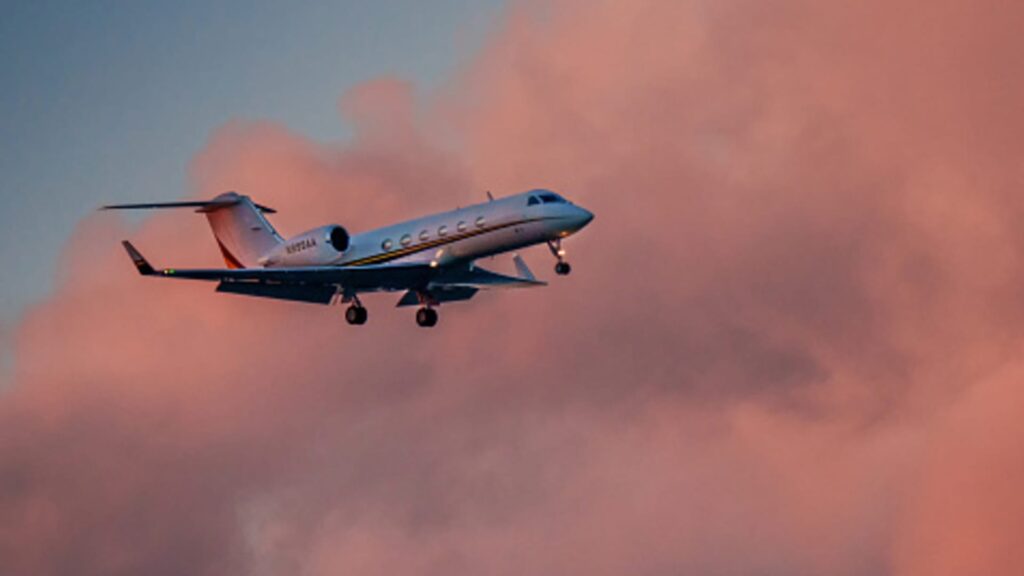
[ad_1] A Gulfstream G-IV private jet on approach to Washington’s Reagan National Airport in Arlington, Virginia, June 12, 2024. J. David Ake | Getty Images As the Iran war pushes jet fuel prices higher, well-heeled travelers are facing hefty surcharges to fly private, sometimes on flights booked months prior, charter brokers and aviation insiders told CNBC. Vimana Private Jets CEO Ameerh Naran said the firm recently booked a $520,000 flight from Dubai to London on a Boeing business jet for a client. That same trip cost the client $400,000 in 2023. The difference was entirely due to jet fuel prices — which now average about $4.65 a gallon globally — Naran said. It’s yet another ripple in the recent disruptions to air travel. More customers turned to private air travel during the pandemic to avoid crowds. The option remains popular and has become more important to the aviation sector as wealthier households prop up spending in travel and other sectors. These deep-pocketed travelers are less likely to get priced out as airfares rise, but they have to navigate unexpected fees as brokers and charters differ on how they pass along fuel costs. Jet fuel prices in major U.S. cities were up more than 80% last month, according to Airlines for America, an industry group, citing Argus data. Jet charter brokers like Vimana arrange flights with jet operators, which own the planes and buy fuel, on behalf of passengers. Naran said Vimana does not renegotiate contracts and does not reprice flights, but that charter prices have surged quickly. He advised travelers to book sooner than later, saying any price hikes are likely to be sticky even if the Iran war ends soon. Larger jet operators are slower to pass along fuel costs to passengers as they buy fuel in bulk and want to avoid alienating customers, according to Naran. However, operators will likely have to pay more at the pump when they replenish their supplies, and some are taking losses by not repricing flights, he said. “There’s a long-term effect, because a lot of companies now will be making losses,” he said. “They’re not going to renegotiate the contract because they don’t want to spoil the relationship with the client, but if they’re making a loss today, they’ve got to recoup it.” Jet charter prices have increased by 5% to 15% on average, with some rising by as much as 20%, since the Iran conflict began, according to charter broker Amalfi Jets’ database. Passing costs to passengers While some operators have raised prices on flights booked months ago and scheduled to fly in the coming weeks, Amalfi Jets CEO Kolin Jones said his company is eating the surcharges for jet card customers. Some operators are also passing along increased war risk premiums for flights in the Gulf, though Amalfi Jets has only encountered this with three flights so far, he said. The charges added about $8,000 to $10,000 per trip, Jones said. Gregg Brunson-Pitts of charter broker Advanced Aviation Team said that while he believes operators should honor prices for previously booked flights, repricing is a risk. In some cases, the fees are relatively insignificant, he said, like a $1,500 surcharge for a flight from Palm Beach, Florida, to Phoenix, Arizona, on a Bombardier Challenger 300, for example. On the other hand, a round trip on a Gulfstream from the East Coast to Asia could incur $20,000 in surcharges for every dollar increase in fuel prices per gallon, he said. Some long-haul trips have all-inclusive fuel pricing, Brunson-Pitts added. Nearly all charter contracts include a fuel variable expense, allowing providers to charge more even if the flight was booked six months ago, according to Amanda Applegate, a partner at Soar Aviation Law. Get Inside Wealth directly to your inbox Fractional jet owners, who share overhead costs in exchange for a set number of flight hours, typically pay an hourly rate on fuel that’s adjusted on a monthly or weekly basis. Even they may be on the hook for surcharges when fuel prices spike, Applegate said. Private jet travelers are less price-sensitive than most flyers, and brokers told CNBC that they haven’t seen surcharges deter demand. Customers who only fly private once or twice a year for special occasions are most likely to get sticker shock, they said. “Realistically, the individuals that are flying private, the need and want and reason of flying private does outweigh cost,” Jones said. “If you’re going to spend $25,000 on a private jet, and let’s say the cost is now $30,000, that doesn’t necessarily price people out.” Brokers are also working to mitigate costs by refueling in countries where fuel is cheaper, even if it means additional flight time, Jones said. Demand for private flying So far, the business jet market is holding steady, with flights up 5% year over year in the week through March 22, according to aviation data and consultancy firm WingX. Flexjet global CEO Andrew Collins said jet utilization by the company’s fractional aircraft owners is up 15% over last year. Clients are generally invoiced after they fly, and the company resets fuel prices toward the end of the month, taking an average of the month, he said. Even as oil prices surge, travelers looking to avoid long lines at airports may be propping up demand for private charters. Recent government shutdowns — a major disruption last fall and now a partial, ongoing shutdown — have left key aviation workers without pay and slowed air travel. Most recently, that has led to hourslong lines at major U.S. airports like those serving Houston and New York as Transportation Security Administration officers called out of work while they weren’t receiving regular pay. In the five weeks after the partial government shutdown began on Feb. 14, business jet departures increased year over year at most metropolitan airports, WingX reported. Flexjet’s Collins said the company saw an increase in what he called “pop-up flights,” or reservations that guaranteed an aircraft within 10 hours of departure,