
China box office isn’t Hollywood kingmaker it used to be. Here’s why

[ad_1] Posters of films are on display at a cinema in Shanghai, Aug. 31, 2025. Vcg | Visual China Group | Getty Images Hollywood has lost one of its most lucrative theatrical markets. It’s unclear if it will ever win it back. The Chinese box office was once a coveted space for American-made movies, so much so that studios produced films that would appeal directly to this international audience. But in the postpandemic cinema landscape, Hollywood hasn’t generated the strong ticket sales it once saw for its biggest blockbusters — and a waning relationship with Chinese cinemas is at least partly to blame. The U.S.-China Film Agreement, struck in 2012 between the two governments, guaranteed 34 U.S. films would be released in China each year. That pact ended in 2017 and was never renewed or renegotiated. At the same time, China began expanding its local film production and instituting blackout dates to promote viewership of its homegrown titles. Add in strict censorship policies from the China Film Administration and recent political strains between the U.S. and China, and Hollywood films have faced several hurdles just to get distribution in the country post-Covid. “I think that the kind of euphoria about the world’s largest market and thinking about China as a place that always creates a larger market for U.S. [intellectual property] is not accurate,” said Aynne Kokas, a professor at the University of Virginia and the author of “Hollywood Made in China.” “[There are] constraints on the market in a couple of ways, first related to content control and not just content control in terms of censorship, but also in terms of control of distribution channels by the party,” Kokas said. She said the film bureau will “turn on and off the levers of distribution based on the needs of the market.” If local Chinese films are doing well, the country will limit distribution access for foreign films. If there are gaps in film releases or releases aren’t selling as many tickets, it will open up the market. In 2019, nine U.S. titles each generated more than $100 million at the Chinese box office, with Disney and Marvel Studio’s “Avengers: Endgame” collecting more than $600 million in the region, according to data from Comscore. In the past five years combined, however, only 10 American films have generated more than $100 million in China, with only two topping $200 million. The outlier is Disney’s “Zootopia 2,” which tallied a record-breaking $650 million in the country following its 2025 release. Box office analysts tell CNBC that this feat is likely an anomaly and studios and Wall Street shouldn’t expect a sudden resurgence of ticket sales for American-made fare in the region even as major franchises launch ahead of the key summer movie season. Market nuances What performs well in the U.S. isn’t guaranteed to succeed in China, despite the massive audience potential. “There’s not necessarily a one-to-one correlation between popular IP in the U.S. and popular IP in China,” Kokas said. In some cases, it’s a lack of nostalgia on the part of Chinese audiences. Kokas noted that when Star Wars was introduced in the region with the sequel trilogy in 2015, it fell flat because the previous films from the original and prequel trilogies were never released in China, so the later installments didn’t have the boost of a built-in fanbase. Distribution experts told CNBC that the Chinese film bureau and audience tend to gravitate toward features that are visual spectacles and apolitical. Films that have performed well in the region since the pandemic include entries from the Fast & Furious saga, Jurassic World flicks and installments from the Godzilla and King Kong franchises. Even with the recent lull in ticket sales from Chinese releases, studios aren’t deterred from launching titles in the region. One distribution expert told CNBC that China remains a major theatrical opportunity for American-made films. “China remains an essential component in any international strategy by U.S.-based studios because there are many hundreds of millions of dollars potentially to be earned there due to an undeniable appetite in the region for the big Hollywood movies,” said Paul Dergarabedian, head of marketplace trends at Comscore. Universal’s “The Super Mario Galaxy Movie” is the next U.S. entrant into the country, due in theaters this weekend. The franchise’s first film, “The Super Mario Bros. Movie,” tallied more than $1.3 billion globally in 2023, but only $25 million of that total came from China. One distribution expert told CNBC that console games, like Nintendo’s Super Mario franchise, are not as prevalent in the region, meaning the nostalgia that drove $575 million in domestic ticket sales was not a major factor over in China. Meanwhile, in Japan, where Super Mario is a cultural icon, the film generated $102 million. Still, the Chinese market helps bolster the overall haul of a film and has the potential to cement a breakout hit. So studios are still willing to give titles a theatrical release in the region. Also on the docket for distribution in China this year is Universal’s “Michael,” Warner Bros.’ “Mortal Kombat II” and Disney’s “The Devil Wears Prada 2.” Because of China’s strict censorship policies, films must be completed and screened by the film bureau before they are considered for distribution. Therefore, the Hollywood slate in China is not set in stone in the same way the domestic movie slate is. But box office analysts expect titles like Disney and Pixar’s “Toy Story 5” and Warner Bros.’ “Dune: Part Three,” as well as Disney and Marvel’s “Avengers: Doomsday” to also land in Chinese theaters this year. Choose CNBC as your preferred source on Google and never miss a moment from the most trusted name in business news. [ad_2] Source link
United announces Base Polaris business class with more restrictions
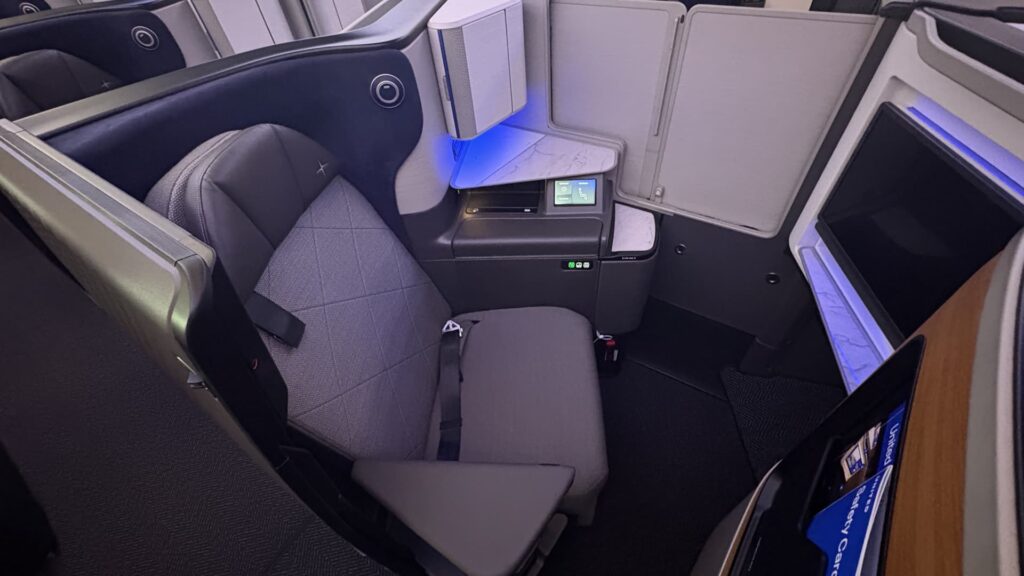
[ad_1] United Airlines new Polaris seat on one of its Boeing 787 Dreamliners Leslie Josephs/CNBC Does it matter where you sit if you’re sipping Champagne in first class? United Airlines is betting that for some travelers looking for luxury at a discount, it doesn’t. The carrier is launching new, cheaper tiers for its top-end Polaris and premium economy cabins that come with many of the same perks — but plenty of restrictions too. Starting this spring, United will offer “Base” Polaris fares which will include a spot in the airline’s long-haul business class cabins featuring lie-flat seats, but will charge those customers extra for advanced seat selection. The new ticket class will also come with only one checked bag instead of two, and with access to the United Club airport lounge but not the higher-end Polaris lounge, which include showers and other plush features. Ticket changes aren’t allowed. Read more about airlines’ race to win over big spenders The other categories for Polaris will be “Standard” and the more expensive “Flexible” option that allows for customers to pay up for the new, more spacious Polaris Studio suites. The new fares show that United — and perhaps soon, other airlines — are dividing up the front of the plane into smaller categories, just as they have with coach over the past decade, from restrictive basic economy tickets to extra legroom fares. United’s new strategy comes as it overhauls its nearly decade-old Polaris class with new suites that feature sliding doors and bigger screens, while customers continue to show their willingness to pay more to fly in better seats. United and its competitors have been racing to add more premium seating on its planes, sometimes removing some economy seats to do so. A spokeswoman for United said customers in Base Polaris would get the same meals — including ice cream — as other passengers in the cabin. She declined to say what the price differences between the fares will be, but said the Base Polaris fare is meant to be an entry-level point for the premium class. United is also launching similar segmentation for its premium economy class, Premium Plus. The new options will be available in certain markets starting this month and will expand to other international and long-haul domestic markets later this year, United said. Rival Delta Air Lines last year said it was also considering segmenting front-of-the-plane cabins. Choose CNBC as your preferred source on Google and never miss a moment from the most trusted name in business news. [ad_2] Source link
JPMorgan CEO Jamie Dimon annual letter cites risks in geopolitics, AI, private markets
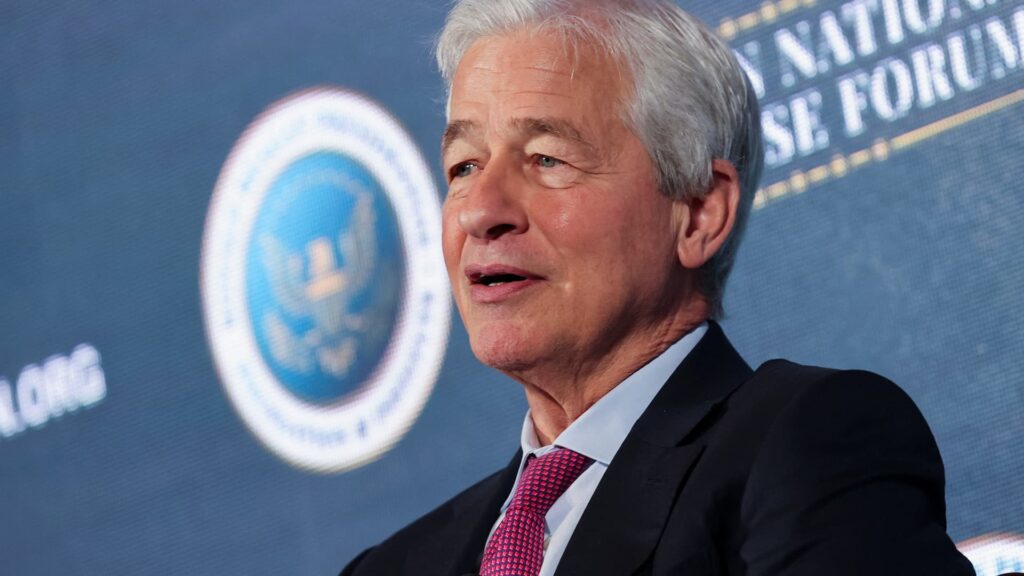
[ad_1] JPMorgan Chase CEO Jamie Dimon is calling for a broad recommitment to American ideals as his bank navigates geopolitical uncertainty, a teetering economy and the revolutionary impact of artificial intelligence. Dimon in his annual letter to shareholders, published Monday, noted the country’s 250th anniversary as “the perfect time to rededicate ourselves to the values that made this great nation of ours — freedom, liberty and opportunity.” “The challenges we all face are significant. The list is long but at the top are the terrible ongoing war and violence in Ukraine, the current war in Iran and the broader hostilities in the Middle East, terrorist activity and growing geopolitical tensions, importantly with China,” Dimon said. “Even in troubled times, we have confidence that America will do what it has always done — look to the values that have defined our singular nation and sustained our leadership of the free world.” Dimon, the longtime leader of the world’s largest bank by market cap, is among the most outspoken of U.S. corporate leaders. His annual letter offers not only a matter of record for his firm’s performance, but also sweeping perspectives on the global state of affairs. In Monday’s letter, Dimon noted headwinds including global conflicts, persistent inflation, private market upheaval and what he called “poor bank regulations.” Dimon said that while regulations like those put in place after the 2008 financial crisis “accomplished some good things … they also created a fragmented, slow-moving system with expensive, overlapping and excessive rules and regulations — some of which made the financial system weaker and reduced productive lending.” He specifically cited negative consequences of capital and liquidity requirements, the current construction of the Federal Reserve’s stress test and a “badly handled” process at the Federal Deposit Insurance Corp. Dimon also said JPMorgan’s reaction to revised proposals for Basel 3 Endgame and a global systemically important bank, or GSIB, surcharge — issued by U.S. regulators last month — were “mixed.” “While it was good to see that the recent proposals for the Basel 3 Endgame (B3E) and GSIB attempted to reduce the increase in required capital from the 2023 proposals, there are still some aspects that are frankly nonsensical,” Dimon said. The CEO said with the aggregate proposed surcharges of about 5%, the bank would need to hold “as much as 50% more capital across the vast majority of loans to U.S. consumers and businesses when compared with a large non-GSIB bank for the same set of loans.” “Frankly, it’s not right, and it’s un-American,” he said. On trade and geopolitics Dimon identified geopolitical tensions as the primary risk facing his bank, namely the wars in Ukraine and Iran and their impacts on commodities and global markets — deeming war “the realm of uncertainty.” “The outcome of current geopolitical events may very well be the defining factor in how the future global economic order unfolds,” he said. “Then again, it may not.” He also cited a “realignment of economic relations in the world” brought on by U.S. trade policy. U.S. President Donald Trump has made tariffs a signature policy of his second term in office, introducing higher duties on dozens of trade partners and import categories. “The trade battles are clearly not over, and it should be expected that many nations are analyzing how and with whom they should create trade arrangements,” Dimon said. “While some of this is necessary for national security and resiliency, which are paramount, it is hard to figure out what the long-term effects will be.” On private markets Dimon also spoke to recent upheaval in the private markets, as fears around loans made to software firms spur massive redemption requests at private credit funds. “By and large, private credit does not tend to have great transparency or rigorous valuation ‘marks’ of their loans — this increases the chance that people will sell if they think the environment will get worse — even if actual realized losses barely change,” Dimon said. The executive added that actual losses are already higher than they should be relative to the environment. “However this plays out, it should be expected that at some point insurance regulators will insist on more rigorous ratings or markdowns, which will likely lead to demands for more capital,” he said. On AI Dimon reiterated Monday that the pace of AI adoption is unlike any technology that came before it. He said while its implementation will be “transformational,” it remains to be seen how the AI revolution will unfold. “Overall, the investment in AI is not a speculative bubble; rather, it will deliver significant benefits. However, at this time, we cannot predict the ultimate winners and losers in AI- related industries,” Dimon said. “We will not put our heads in the sand. We will deploy AI, as we deploy all technology, to do a better job for our customers (and employees),” he wrote. JPMorgan has been at the forefront of Wall Street firms introducing AI at every level of its business. Last year, JPMorgan Chief Analytics Officer Derek Waldron gave CNBC an early demonstration into how it’s using agentic AI to speed up work and improve results for customers and shareholders. In February, Dimon said AI was reshaping JPMorgan’s workforce and that the bank had “huge redeployment plans” for employees. “We have focused on some of the ‘known and predictable’ and some of the ‘known unknown’ events,” he said. “But huge technological shifts like AI always have second- and third-order effects as well that can deeply impact society. … We should be monitoring for this kind of transformation, too.” — CNBC’s Leslie Picker and Ritika Shah contributed to this report. Choose CNBC as your preferred source on Google and never miss a moment from the most trusted name in business news. [ad_2] Source link
Trump administration finalizes Medicare Advantage payment rate
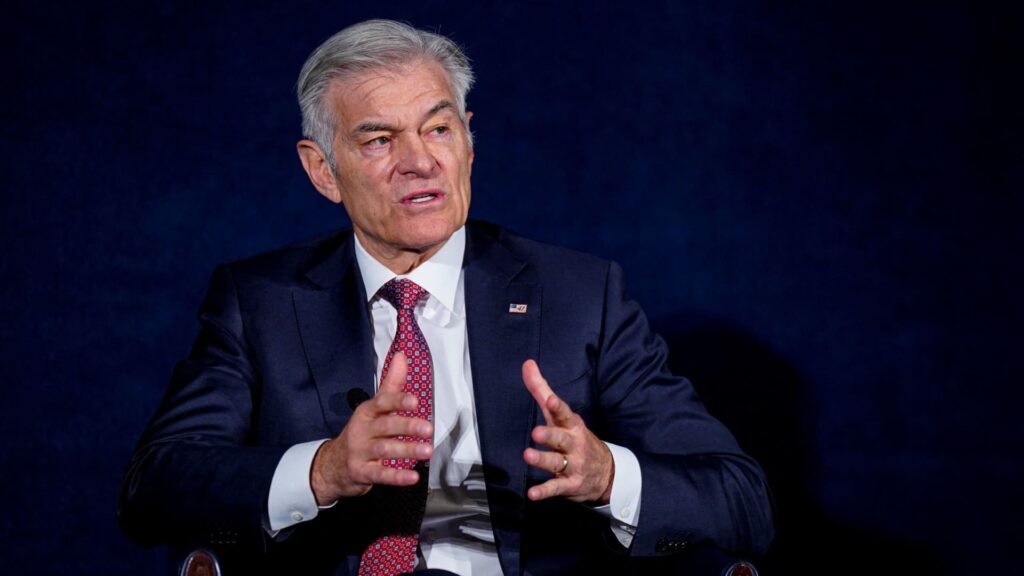
[ad_1] Administrator for the Centers for Medicare & Medicaid Services Mehmet Oz speaks during an event sponsored by the Action for Progress Coalition, at the National Press Club in Washington, D.C., U.S., Feb. 2, 2026. Al Drago | Reuters The Trump administration on Monday finalized a 2027 payment rate increase to privately run Medicare plans that was far bigger than initially proposed, a boost to health insurer stocks and seniors whose out-of-pocket costs may end up lower than feared. The government will increase average Medicare Advantage payments by 2.48%, or more than $13 billion, in 2027, according to a release from the Centers for Medicare & Medicaid Services. The Trump administration in January proposed a payment rate hike of 0.09%, which pummeled shares of insurers that run those plans. Shares of UnitedHealth and CVS Health rose more than 9% in after-hours trading on Monday. Meanwhile, Humana‘s stock jumped around 12%. The closely watched government payment rate determines how much insurers can charge for monthly premiums and plan benefits they offer and, ultimately, their profits. The finalized rate can help insurers stabilize their businesses, with higher payments offsetting rising medical costs. The insurance industry has been pinched by an influx of people seeking care they delayed post-pandemic and high-cost specialty drugs like GLP-1s, among other factors. But sufficient payments from the government also allow plans to keep premiums low for seniors and reduce out-of-pocket costs for patients, which attracts and retains members. “Medicare Advantage and Part D should work for the people who rely on them,” said CMS Administrator Dr. Mehmet Oz in a release. “These updates keep coverage affordable and ensure patients get real value from their plans.” Medicare Advantage has long been a key source of growth and profits for the insurance industry, driven by annual increases to government payment rates and obscure policies that have allowed insurers to “upcode” patients to appear sicker than they are and maximize those payments. The rate increase isn’t “so awesome in a vacuum, but is certainly better” than the Trump administration’s initial proposal, said Mizuho health-care specialist Jared Holz in a note to clients late Monday. He said the boost may help companies expand margins in 2027 if they keep reducing benefits and managing expenses. More than half of Medicare beneficiaries are enrolled in Advantage plans, enticed by lower monthly premiums and extra benefits not covered by traditional Medicare, according to health policy research firm KFF. Choose CNBC as your preferred source on Google and never miss a moment from the most trusted name in business news. [ad_2] Source link
Chrysler CEO touts minivan ‘resurgence’ but stays quiet on plans
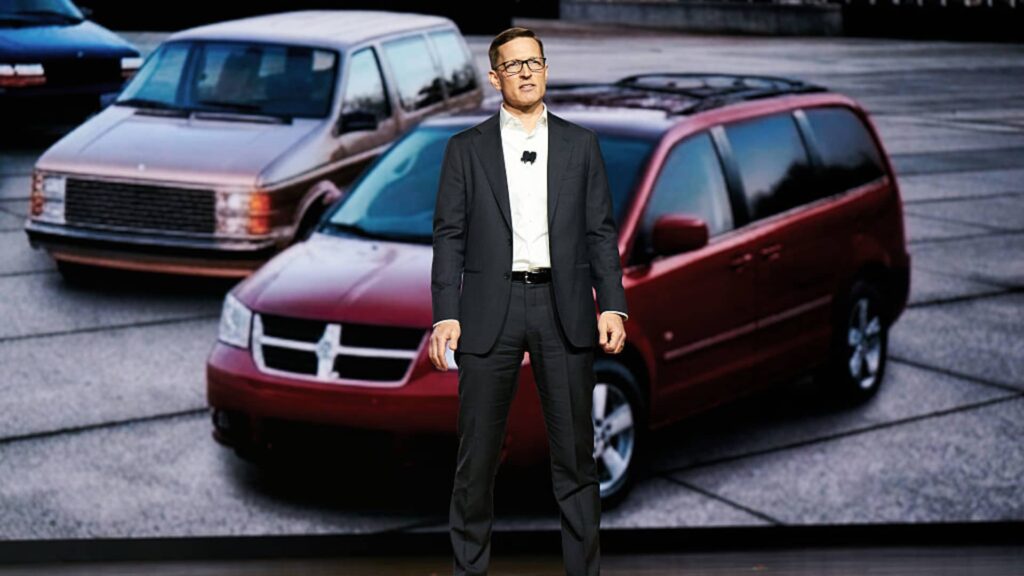
[ad_1] Matt McAlear, chief executive officer of Chrysler and Dodge, during the 2026 New York International Auto Show (NYIAS) in New York, US, on Wednesday, April 1, 2026. Bing Guan | Bloomberg | Getty Images Chrysler and Dodge CEO Matt McAlear wants the world to know that the minivan is not dead. Far from it, he said, at the New York International Auto Show, where he showed off the latest version of the Pacifica Pinnacle, the highest-end trim of the brand’s sole product line. The Chrysler brand — once one of the biggest names in the auto industry — only sells a single family of minivans, which many take as a sign of the brand’s impending demise. Chrysler, which has been promising new products for years, said it will share more plans at parent company Stellantis‘ investor day on May 21 in Auburn Hills, Michigan. McAlear didn’t elaborate further but said the brand had “a lot of things in the works” and touted its only vehicle. “We absolutely see the minivan market growing, and we believe there’s an opportunity for Chrysler to continue its growth year over year,” McAlear said. Chrysler is the best-selling brand in the segment, he added. Minivan resurgence? Chrysler is often credited with inventing the minivan, or at least mainstreaming it in the United States in the early 1980s. Rivals followed, but many have since abandoned it. Since the 1990s, minivans have steadily lost ground to SUVs, which are considered sportier and more adventurous. Minivan sales were a mere 1.7% of the market in 2017, according to Edmunds. In 2025, they were up to 2.4%. Sales numbers from Chrysler and its few competitors in this segment indicate growing interest in the adaptive and often affordable “multipurpose vehicle,” as the minivan is sometimes called. The average transaction price for a large SUV is $77,215, according to Edmunds. The average minivan price, meanwhile, is $48,269 — just above the overall industry average cost for a new vehicle of $48,402. There is enough demand that Chrysler saw fit to unveil a new highest-end version of its minivan at the Auto Show, called the Pinnacle. The vehicle is full of features common in higher-end family vehicles, like screens on the backs of seats so passengers in a rear row can watch movies on a road trip. But there are also some perks that are tough to find outside the segment: both second and third row seats on some versions can be completely stowed in the floor, for example. Companies like Chrysler are also trying to look beyond the “family hauler” identity the minivan has had for much of its history. Its Grizzly Peak concept has knobby tires and a roof rack, for a more rugged option and McAlear said the company was thinking about how to do more of that. “We’re looking at it,” he said. “We’re trying to figure out if there’s a way to do it because people love it. And it is unlike anything you’ve ever seen from a minivan brand before.” McAlear also touted the van’s storage capacity compared with similar vehicles. “I’ve got a friend that’s a racecar driver,” he said. “One of his favorite things about this is he puts a shifter kart in the backseat with the third row down, with his kids so he can keep it safe and doesn’t have to have a trailer. Another buddy of mine loves kiteboarding, and he doesn’t want to put it on the top because it’s hard to get it up and down. It’s hard to keep it secure and safe. He keeps it inside.” Pacifica sales were only up slightly in 2025. The affordable Voyager model, which the brand has since renamed the Pacifica LX, sells in lower quantities but saw a bigger jump. Pacifica sales were down for the first quarter of 2026, but Chrysler said they were up nearly 84% in March year over year. There are only a handful of vehicles in this segment in the U.S., or five basic model lines including the electric Volkswagen ID Buzz, which VW prefers not to call a minivan. Toyota Sienna sales jumped 35% in 2025, and were up again in the first quarter of 2026. It’s nowhere near Toyota’s best-selling vehicle, and many models — some of which were new ones or refreshes — saw greater increase. Toyota’s Japanese rival Honda saw sales of its Odyssey jump 10% last year. But they dipped in the first quarter of 2026. One especially successful model has been the Kia Carnival. Volumes rose in 2025 and in the first quarter of 2026. It still doesn’t match Kia’s comparable SUVs, as minivan sales are just a few thousand shy of the three-row Sorento, but far below the popular, more rugged Telluride. “Carnival is just a great family, practical vehicle,” said Eric Watson, vice president of sales operations for Kia America. “I think in the stage of life when people have kids and want those power sliding doors and the configuration of what that vehicle provides, it’s perfect in that life stage.” Kia was one of the later entrants into the segment, and though it has the sliding rear door that defines the minivan segment, the body panel on it is punched into give the illusion the vehicle is an SUV. “I think that attracts a lot of people and lowers that stigma of being a minivan family,” Watson said. But some are attracted to the segment itself. While the Chrysler Pinnacle starts above $56,000, the lowest priced LX, starts just above $41,000. “We’re actually seeing a resurgence,” McAlear said. “At the end of the day, these things make life easier and you don’t always have to impress everybody.” Choose CNBC as your preferred source on Google and never miss a moment from the most trusted name in business news. [ad_2] Source link
Iran war upends spring housing
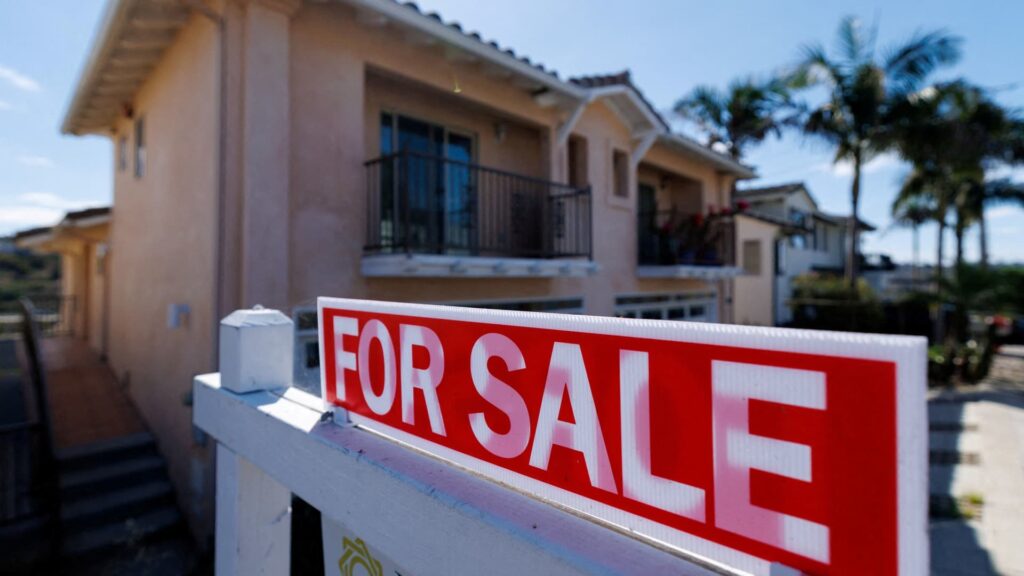
[ad_1] A version of this article first appeared in the CNBC Property Play newsletter with Diana Olick. Property Play covers new and evolving opportunities for the real estate investor, from individuals to venture capitalists, private equity funds, family offices, institutional investors and large public companies. Sign up to receive future editions, straight to your inbox. The all-important spring housing market is well underway, but expectations are falling short due to the war in Iran and its impact on both the U.S. economy and consumer sentiment. Mortgage rates, which were previously forecast to be far lower this spring than last, are now much higher, and concerns over employment and inflation are throwing cold water on pent-up homebuyer demand. Buyers in the first quarter of this year were more concerned about the economy and mortgage rates than they were about home prices, according to real estate agents who participated in the quarterly CNBC Housing Market Survey. “They’re fearful of the war, they’re fearful of gas prices, [for] their job security,” said Faith Harmer, an agent in the Las Vegas metropolitan area. The CNBC Housing Market Survey is a national inquiry of real estate agents selected randomly across the United States. Responses for the first-quarter survey were collected between March 24 and March 30. This quarter, 70 agents shared their insights. When asked about their buyers’ primary concern, about one-third of agents said the economy, while another third said mortgage rates. The latter marked a big jump from just 26% in the fourth quarter. Only 9% of agents in the first-quarter survey said prices were their buyers’ biggest concern, down from 18% in the previous period. This should come as no surprise, as the average rate on the 30-year fixed mortgage hit a low of 5.99% the day before the Iran war started and then began to climb. It’s now hovering around 6.5%. Still, while most agents said prices were either flat or falling, nearly twice as many agents, 29%, reported home prices rising during the first quarter than did in the previous quarter. Price dynamics can vary widely depending on the market and region of the country. But affordability is not improving as much as most experts had forecast. When asked how affordability was hitting buyers, 19% of agents said it was causing them to get out of the market. That was up from just 11% at the end of last year. More than half of agents reported at least one contract cancellation. “Buyers that were on the fence and deciding to buy are now on the fence and going the other direction, saying, ‘I’m not going to buy,’” said Eric Bramlett, an agent in Austin, Texas. As buyer demand drops, homes are sitting on the market longer. In the first quarter, 31% of agents reported that their listings were on the market for more than six weeks, compared with 26% in the fourth quarter. “We just had one recently where they wanted what they wanted, and they wouldn’t come down to a price that the market could bear,” Harmer, the agent in Las Vegas, said. “So, in the end, they just pulled it off the market.” Sellers are now more worried about that wait time. Fully 37% of responding agents said time on the market was their sellers’ top concern, compared with 30% at the end of last year. That took share from price as sellers’ top concern, falling from nearly half of agents ranking it first to 39%. Still, fewer agents reported price cuts than the previous quarter, but that may be the result of seasonal dynamics and the impact of lower mortgage rates in the middle of the first quarter, which gave buyers more purchasing power. That may also be why fewer agents said they had to delist homes compared with the fourth quarter, when agents reported a slower-than-usual fall market with more frustrated sellers. Even as concerns over the economy and interest rates rise, agents in the first quarter still said the market was either in the buyer’s favor or balanced. The share that called it a buyer’s market did drop quarter to quarter, from 42% to 36%, likely due to those new buyer headwinds – higher mortgage rates, the war and a weaker job market. And sellers are taking note. “We’ve had two sellers who were planning on listing in May already decide, ‘Let’s hold, let’s search later in the summer for our next home to buy, and then we’ll try and list in the fall,’” said Dana Bull, an agent in the Boston area. “So they originally thought that the spring would be perfect for them, because it just felt like it was going to be the best time, and now they don’t feel as confident, and they want to wait and see.” Just over half of agents surveyed said they expect the market to improve as the spring goes on, but that share is way down from the end of last year, when there was no war in the picture. A higher share of agents said they expect the market to stay the same as last quarter, which is significant, given that the market is going from the historically slowest season for housing to the usually busiest. Get Property Play directly to your inbox CNBC’s Property Play with Diana Olick covers new and evolving opportunities for the real estate investor, delivered weekly to your inbox. Subscribe here to get access today. Choose CNBC as your preferred source on Google and never miss a moment from the most trusted name in business news. [ad_2] Source link
Levi Strauss (LEVI) earnings Q1 2026
[ad_1] Levi Strauss saw another quarter of strong sales, helped in part by higher prices, and direct-to-consumer sales made up more than half of its overall revenue — a milestone for a company that has long relied on wholesalers. The denim maker’s revenue grew by 14% while DTC sales through Levi’s own stores and website jumped 16%, bringing total DTC sales to 52% of overall revenue. In an interview with CNBC, CEO Michelle Gass said she expects DTC revenue to make up more than half of overall sales for the duration of the year, even as its more traditional wholesale channel continues to grow. The growth is not from increased sales volume alone: Levi is benefiting from higher prices and positive foreign exchange headwinds. Finance chief Harmit Singh, who announced plans to retire on Tuesday, said about half of Levi’s growth is related to recent price increases and half is tied to actual units sold. Given its first-quarter beat, Levi raised its guidance. It’s now expecting full-year adjusted earnings per share to be between $1.42 and $1.48, shy of expectations of $1.47 per share on the low end, according to LSEG. It’s expecting sales to rise between 5.5% and 6.5%, largely ahead of estimates of 5.6%, according to LSEG. Here’s how the apparel maker did in its first fiscal quarter compared with what Wall Street was anticipating, based on a survey of analysts by LSEG: Earnings per share: 42 cents adjusted vs. 37 cents expected Revenue: $1.74 billion vs. $1.65 billion expected The company’s reported net income for the three-month period that ended March 1 was $175.8 million, or 45 cents per share, compared with $135 million, or 34 cents per share, a year earlier. Sales rose to $1.74 billion, up about 14% from $1.53 billion a year earlier. Levi’s DTC-first strategy comes with bigger margins but also higher costs in the short term as it changes its distribution system, which has weighed on earnings. However, Singh said its sales are becoming more profitable as DTC scales. He also noted that Levi’s guidance could rise later in the year. Currently, it’s assuming a 20% global tariff, though President Donald Trump has for now set a 10% duty on U.S. imports after the Supreme Court rolled back so-called reciprocal tariffs earlier this year. If that 10% tariff remains in effect, it could boost full-year earnings by $35 million, or 7 cents per share. The company could also be refunded as much as $80 million after the Supreme Court struck down Trump’s previous global tariff policy, Singh said. While that could boost earnings, Levi could face weaker sales in the coming months as consumers digest higher gas prices and consider pulling back on nice-to-haves like new clothes. Gass told CNBC she has not seen a pullback in spending so far, and the business is segmented in a way that it’s reaching a wide array of consumer demographics. For example, Levi’s value brand Signature saw sales rise 16% during the quarter and its middle market Red Cap was up 9%, while its premium line Blue Tab is also growing, said Gass. “We talked about over the last couple years, we made big, bold moves like selling Dockers and other brands and businesses. Now we’re really focused on segmentation around the Levi’s umbrella,” said Gass. “We feel like we’re really covered to serve the consumer across really every demographic and psychographic cohort and I think the other piece is, when we think about our business globally, 60% of our business is outside the U.S., which also gives us some really nice diversification. So we’re watching it closely, but overall, we’re feeling good about the consumer.” Choose CNBC as your preferred source on Google and never miss a moment from the most trusted name in business news. [ad_2] Source link
Delta, Southwest raises checked bag fees $10 amid jet fuel price surge
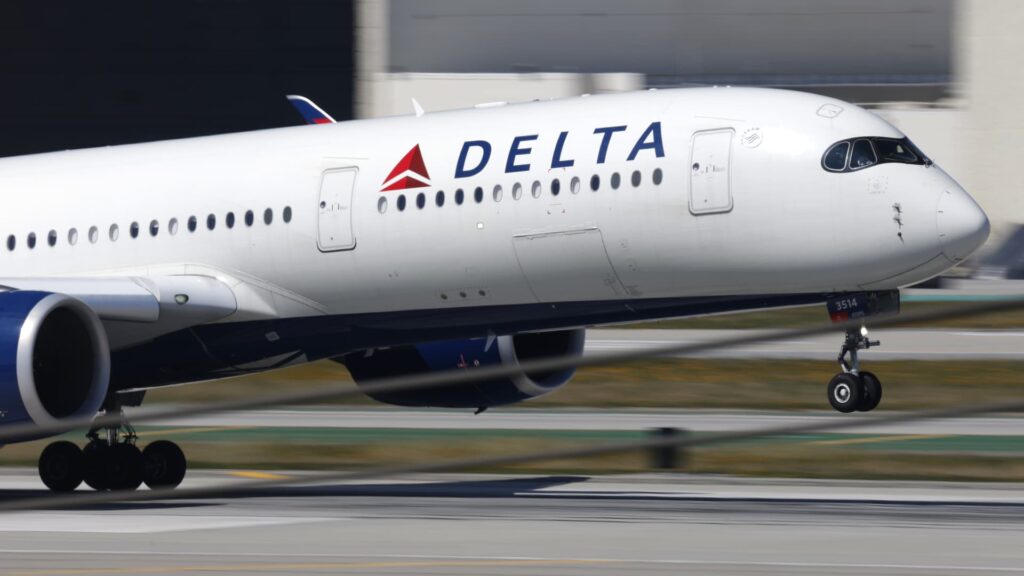
[ad_1] A Delta Air Lines Airbus A350 airplane lands at Los Angeles International Airport after arriving from Atlanta on March 7, 2026 in Los Angeles, California. Kevin Carter | Getty Images Delta Air Lines and Southwest Airlines are raising checked bag fees by $10, the third and fourth major U.S. carriers to increase prices as the industry grapples with a jump in jet fuel expenses this year. “As part of an ongoing analysis of the business and against the evolving global backdrop, Southwest Airlines is increasing its fees on first and second checked bags by $10, effective on all reservations ticketed or voluntarily changed on or after April 9, 2026,” Southwest said in a statement. Southwest Airlines ended its policy allowing all customers to check two bags for free less than a year ago. The changes would bring the fee to check a first piece of luggage to $45, and $55 for a second bag on each airline. Delta’s changes take effect with bookings starting Wednesday and apply to domestic flights and shorter flights abroad, but not to long-haul international travel. “These updates are part of Delta’s ongoing review of pricing across its business and reflect the impact of evolving global conditions and industry dynamics,” the airline said in a statement Tuesday. A third bag on Delta would cost $200 to check. Last week, United Airlines and JetBlue Airways increased their checked bag fees. Other carriers often follow such pricing moves. Jet fuel in major U.S. cities was going for $4.69 a gallon on Monday, according to Airlines for America, citing Argus data, up nearly 88% since the U.S. and Israel attacked Iran on Feb. 28. The key Strait of Hormuz shipping channel has remained effectively closed over the past month, choking off global crude and refined fuel supplies. Delta reports first-quarter results before the market opens on Wednesday, and investors are likely to question executives on how well they are covering the surge in fuel, airlines’ biggest expense after labor. Analysts have pointed to strong demand as a salve for high fuel, but it’s not clear that carriers will be able to cover the entirety of the fuel price run-up. Read more CNBC airline news Choose CNBC as your preferred source on Google and never miss a moment from the most trusted name in business news. [ad_2] Source link
Novo Nordisk’s Wegovy pill launch draws new wave of patients to GLP-1s
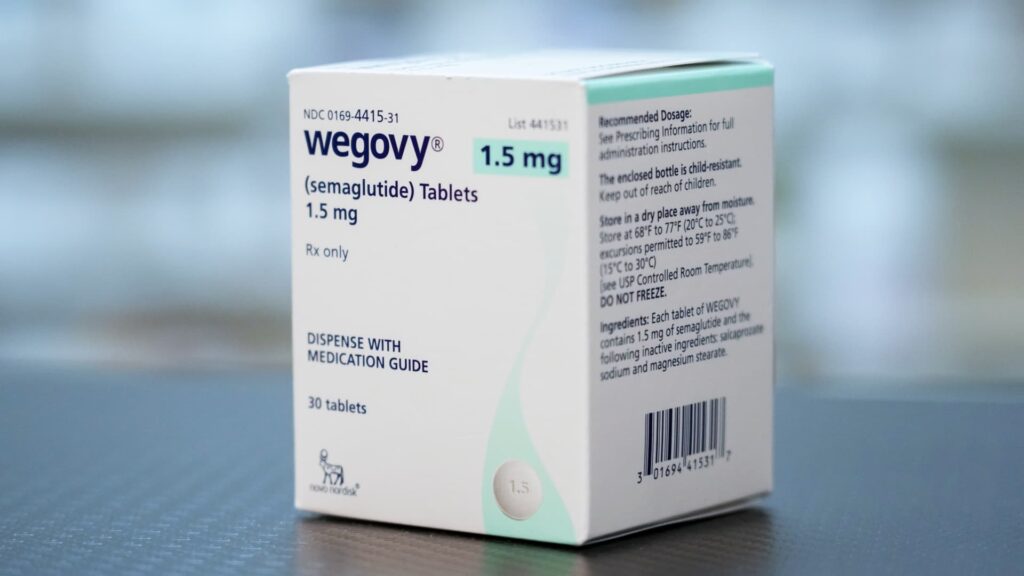
[ad_1] After years of trying to lose weight “the right way,” Jane Zuckerman realized that “putting in the work just wasn’t enough.” Zuckerman, a 32-year-old data analyst based in Washington, D.C., said she lost 90 pounds in college and spent years cycling through nutritionists, therapy and strict routines — only to find herself at her heaviest after the pandemic, at 270 pounds. Zuckerman said GLP-1 injections were out of the question, because she’s afraid of needles. But when the first GLP-1 pill for obesity became available in early January, Zuckerman called her doctor immediately, she said. Almost a month after starting Novo Nordisk‘s new Wegovy pill shortly after it launched, she said, she had lost around 11 pounds. Zuckerman is among tens of thousands of patients who drove an explosive demand for prescriptions for Novo’s pill just three months into its launch. Many of them share a common thread: They had long held off on using GLP-1s due to barriers such as high out-of-pocket costs for injections or a fear of needles. That’s one of the earliest takeaways from the rollout: Novo’s pill appears to be expanding the obesity treatment market, largely drawing in new patients rather than converting existing ones from injections. CNBC spoke with five U.S. patients who recently started the pill following its launch, all of whom said they have not previously taken branded GLP-1 injections. But it’s early days for the pill. Many patients have yet to reach higher doses of the drug, and their experiences vary. It will take more time to determine how effective the pill is in supporting patients’ long-term weight loss journeys, whether it helps keep users on GLP-1s for longer than injections do and whether demand for Novo’s product will hold in the face of fresh competition from Eli Lilly. Novo has a head start in the pill arena over Lilly, which just won U.S. approval of its own GLP-1 drug for obesity last week. Analysts previously told CNBC they still expect that rival pill, called Foundayo, to capture a segment of the market, in part because it lacks the dietary restrictions that come with Novo’s oral drug. Still, the Wegovy pill appears to have had the most explosive launch of a GLP-1 product yet. The latest number that Novo disclosed in February is that more than 600,000 prescriptions had been written since its launch, including for more than 3,000 patients in the first week. Analysts at BMO Capital Markets attributed some of the early uptake to an “attractive” entry price of $149 per month and its connection to the well-known Wegovy brand. The pill carries one of the lowest cash prices for a GLP-1 therapy, ranging from $149 to $299 per month, depending on the dose. Even so, the pill’s launch has done little to boost Novo’s stock price, as the Danish drugmaker is struggling to win back market share from Lilly in the broader obesity space and convince investors that its drug pipeline can help it grow beyond its existing products. Novo is expected to report first-quarter sales, which will include the pill for the first time, in May. But sales of the overall Wegovy portfolio are expected to increase from $13.5 billion in 2026 to $18.9 billion in 2031, with the pill contributing $2.76 billion, according to a March GlobalData report. Reaching new patients The Wegovy pill is attracting patients with a fear of needles, which is estimated to affect up to 25% of U.S. adults. But the drug is also an alternative for those who have had difficulty accessing branded GLP-1 injections or other medications. “There are a handful of patients that don’t want to be stung by the needle in the case of a vial and syringe, or stung by the price,” Jamey Millar, Novo’s head of U.S. operations, told CNBC in an interview last week. “We’re appealing to both.” Dr. Eduardo Grunvald, medical director of the UC San Diego Health Center for Advanced Weight Management, said the main reason he’s prescribed the Wegovy pill to some patients is cost, since its cash prices are slightly lower than those of injections. But Grunvald said overall, obesity medicine specialists like him will still be inclined to prescribe injections over oral drugs, in part because the shots are more effective. A box of Wegovy pills arranged at a pharmacy in Provo, Utah, US, on Thursday, Jan. 15, 2026. George Frey | Bloomberg | Getty Images Cost was a deciding factor for Amy Sawyers-Williams, who works at a theater company in Raleigh, North Carolina, and had gestational diabetes. In 2023, a few years after her son was born, she said, she began developing prediabetes and met the criteria for obesity. She said she would have started using GLP-1 injections sooner, but her insurance would not cover them for her. That was long before Novo and Lilly slashed the cash prices of their obesity and diabetes injections. The list prices of their shots are roughly $1,000 per month before insurance and other rebates, or discounts for cash-paying patients — a sum that has long prevented many others from starting and staying on treatment. Novo has committed to cutting the monthly list prices of its drugs in the U.S. by up to 50%, but that change won’t go into effect until 2027. High prices also shut Sawyers-Williams out from taking the branded weight management treatment Contrave, pushing her to combine two generic medications to mimic the drug’s effects, she said. But earlier this year, she said, her endocrinologist recommended the Wegovy pill, in part due to its lower $149 per month pricing for the starting dose. Sawyers-Williams became the first patient at her doctor’s practice and local Walgreens to take the pill, starting in mid-January, she said. Some Wegovy pill users are patients who wanted to switch over from injections, said Dr. Heather Hofflich, a physician and endocrinologist at UCSD Health. She said she’s prescribed the pill for some people whose insurance stopped covering the injections but who want to
Jet fuel supply concerns grow with Iran war as airlines cut flights
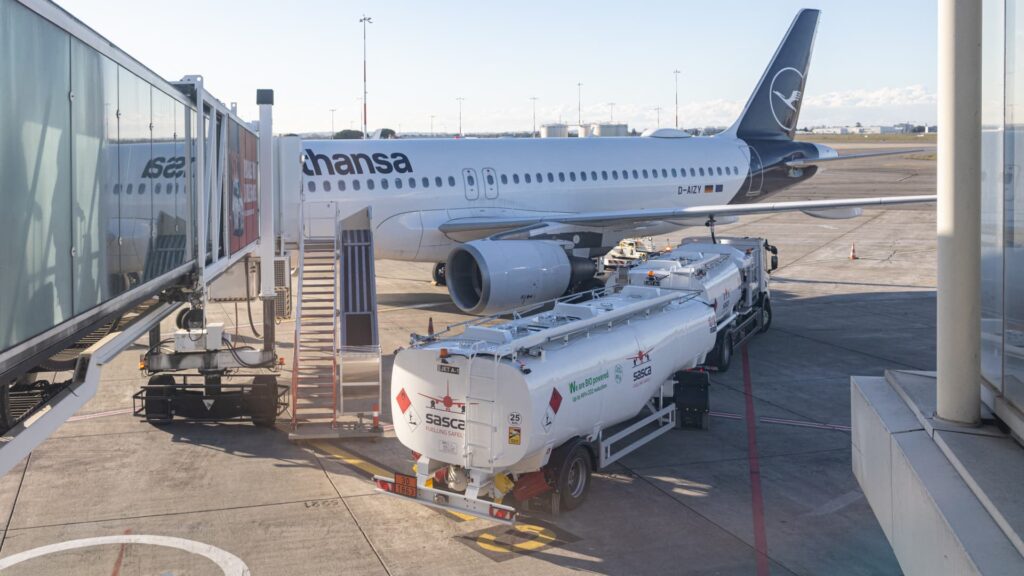
[ad_1] A Lufthansa passenger aircraft is parked at a gate while a SASCA fuel truck services it on the apron at Toulouse Blagnac Airport in Blagnac in Occitanie in France on March 15, 2026. Isabelle Souriment | AFP | Getty Images The surging price of jet fuel isn’t the airline industry’s only problem. Now, it’s whether it will have enough. Since the U.S. and Israel attacked Iran on Feb. 28, the price of jet fuel in the U.S. has nearly doubled, going from $2.50 a gallon on Feb. 27 to $4.88 a gallon on April 2, with the increases even sharper in other regions. The effective closure of the Strait of Hormuz is choking off supplies of both crude and refined products like jet fuel, further driving up the price. That’s forcing airlines to consider cutting flights, especially overseas. Carsten Spohr, CEO of Germany’s Deutsche Lufthansa, told employees in a webcast last week that the carrier is assigning teams to come up with contingency plans because of the war in the Middle East, including for drops in demand or a lack of jet fuel, a spokesman said. Those plans could include grounding some of its aircraft. The U.S. produces a lot of jet fuel and isn’t as exposed as other regions like Europe and parts of Asia are in comparison. But aircraft fill up locally, so some U.S. airlines could face shortages on international trips. United Airlines CEO Scott Kirby told reporters late last month that the carrier, which has the most service to Asia among U.S. airlines, would have to cut back its flights there. He also said it’s “not impossible” that airlines collectively would have to reduce service in that region. He noted that as the price of jet fuel goes up, it could be more acute in parts of the U.S. that aren’t as connected by pipelines. “There’s not enough refining capacity, and so fuel price prior to this and going forward is more susceptible to supply weakness on the West Coast than anywhere else in the country,” he said. Kirby told employees earlier in March that the airline is preparing for oil to stay above $100 a barrel through 2027 and is pruning some of its flights in the near term. “To be clear, nothing changes about our longer-term plans for aircraft deliveries or total capacity for 2027 and beyond, but there’s no point in burning cash in the near term on flying that just can’t absorb these fuel costs,” he said in a March 20 message to employees. Travel demand wild card Airlines overall are pruning some flights for the coming months, though they often adjust schedules throughout the year to match demand, aircraft availability or other complications. Domestic capacity in the second quarter for U.S. carriers is up 2.1%, down from previous plans of 2.3% growth, while total capacity is set to rise 1.1%, down from 2.4% on the week ended March 20, according to a Monday report from UBS. “We expect more capacity cuts in the coming weeks,” UBS said. So far, airline executives have said that travel demand is strong, but the fuel strains and price spikes are a headache for carriers and passengers alike as the peak summer travel season approaches. Fuel is generally airlines’ biggest expense after labor, and carriers are already raising airfare and fees like for checked luggage to make up for the added cost. Investors will be listening for more insights into how the jet fuel spike could affect the industry as airline earnings kick off Wednesday with Delta Air Lines. That carrier owns a refinery, so it could benefit from jet fuel sales. Delta on Tuesday raised checked bag fees, joining JetBlue Airways and United, which did the same last week. The strong demand, particularly compared with this time last year could further insulate airlines, at least in the U.S. Last year, bookings fell as President Donald Trump‘s trade war kicked off with steep tariffs, markets sank and layoffs within the government, led by Elon Musk‘s so-called Department of Government Efficiency, took effect. “The positive commentary on demand is still holding, but fuel at $4/4.50 [a gallon] for longer isn’t something airlines can pass through,” said Savanthi Syth, an airline analyst at Raymond James. “If fuel stays high, you’ll just see capacity being cut.” Airlines could see a bigger problem if higher gasoline prices and other pressures on consumers cause a pullback in spending. “We’re watching the airlines very closely right now. This doesn’t have to go on too terribly long at these [fuel price] levels before you start to see potential for ratings pressures,” said Joseph Rohlena, senior director at Fitch Ratings who covers U.S. airlines. Read more CNBC airline news Choose CNBC as your preferred source on Google and never miss a moment from the most trusted name in business news. [ad_2] Source link