
TL;DR
Filing your Income Tax Return (ITR) is more than just a legal requirement—it’s an important financial responsibility that helps you claim refunds, maintain compliance, and build financial credibility. This guide explains who should file, which documents you need, the correct ITR form, how to file online, common mistakes to avoid, and how Budget 2026 changes may affect taxpayers. It also covers important filing deadlines and practical tips to make your filing process smooth and error-free. Budget 2026 retains the existing tax slabs while introducing procedural simplifications, including the rollout of the new Income Tax Act and revised compliance timelines.
Introduction
Income Tax Return (ITR) filing season is one of the most important financial events for salaried individuals. While many employees assume that tax deducted through TDS is sufficient, filing your ITR remains essential for claiming refunds, carrying forward losses, applying for loans, obtaining visas, and maintaining a transparent financial record.
For Assessment Year 2026–27, the filing process is expected to remain largely digital and pre-filled, making compliance easier. However, taxpayers must still verify all information carefully, especially with changes introduced under the Union Budget 2026 and the transition toward the new Income Tax Act.
This comprehensive guide will help you file your ITR accurately while avoiding common errors that could delay refunds or trigger notices.
Why Filing Your ITR Matters
Even if your employer has deducted TDS every month, filing an Income Tax Return provides several advantages:
- Claim excess TDS refunds.
- Carry forward capital or business losses where eligible.
- Strengthen your financial profile for loans and visas.
- Maintain legal compliance.
- Reduce the risk of future tax notices.
- Keep a transparent financial history.
Filing early also helps you receive refunds faster and avoids the last-minute rush before the due date.
Who Should File an Income Tax Return?
Generally, salaried individuals should consider filing an ITR if:
- Their gross total income exceeds the applicable exemption limits.
- TDS has been deducted and a refund is expected.
- They have interest income, rental income, or capital gains.
- They own foreign assets or have overseas income (subject to applicable reporting requirements).
- They satisfy any mandatory filing conditions prescribed under the Income-tax Act.
Even if tax liability is nil, filing an ITR can be beneficial for future financial transactions.
Important ITR Filing Deadlines for AY 2026–27
Budget 2026 introduces a staggered filing schedule for different taxpayer categories while retaining 31 July 2026 as the due date for most salaried individuals not subject to audit. Certain non-audit business taxpayers have a later due date, and revised return timelines have also been extended. Always verify the deadline applicable to your category before filing.
| Taxpayer Category | Expected Due Date |
|---|---|
| Salaried Individuals (Non-Audit) | 31 July 2026 |
| Eligible Non-Audit Business/Profession Cases | 31 August 2026 |
| Audit Cases | 31 October 2026 |
Documents You Should Keep Ready
Before starting your return, gather:
- Form 16 issued by your employer (or the applicable salary/TDS certificate under the current rules).
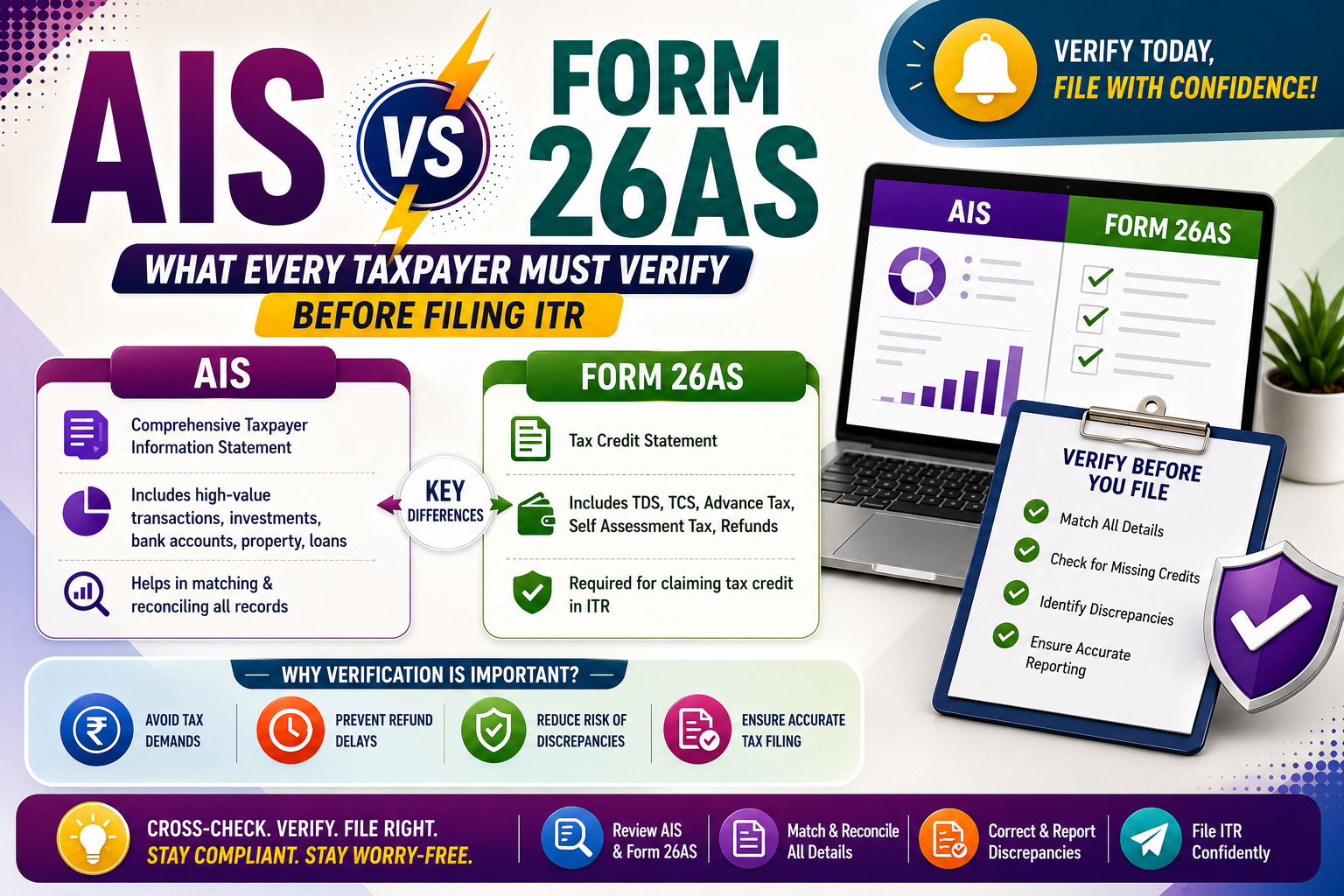
- Form 26AS.
- Annual Information Statement (AIS).
- Taxpayer Information Summary (TIS).
- Salary slips.
- PAN and Aadhaar.
- Bank account details.
- Interest certificates from banks.
- Investment proofs.
- Home loan interest certificate (if applicable).
- Health insurance premium receipts.
- Donation receipts (where eligible).
Having these documents ready significantly reduces filing errors.
Which ITR Form Should Salaried Employees Choose?
Selecting the correct Income Tax Return (ITR) form is one of the most important steps in the filing process. Filing the wrong form can lead to defective return notices and delays in processing.
Common ITR Forms for Salaried Individuals
| ITR Form | Suitable For |
|---|---|
| ITR-1 (Sahaj) | Salaried individuals with eligible income sources such as salary, one house property, and other income within the prescribed limits. |
| ITR-2 | Salaried individuals with capital gains, multiple house properties, foreign assets, or income not covered under ITR-1. |
| ITR-3 | Individuals having income from business or profession. |
| ITR-4 (Sugam) | Eligible taxpayers opting for the presumptive taxation scheme under the Income-tax Act. |
Pro Tip: If you’re unsure which form applies to your situation, consult a Chartered Accountant before filing. Choosing the wrong form can delay your refund and may require filing a revised return.
Old Tax Regime vs New Tax Regime
One of the most common questions salaried employees ask is:
Which tax regime should I choose?
The answer depends on your salary structure, eligible deductions, investments, and financial goals.
| Old Tax Regime | New Tax Regime |
|---|---|
| Allows various deductions and exemptions | Lower tax rates with fewer deductions |
| Suitable for taxpayers claiming multiple deductions | Suitable for individuals with limited investments or deductions |
| Requires investment planning | Simpler filing process |
The Old Tax Regime May Benefit You If You Claim:
- House Rent Allowance (HRA)
- Home Loan Interest
- Section 80C investments
- Section 80D Health Insurance
- National Pension System (NPS)
- Education Loan Interest
- Donations eligible under applicable provisions
The New Tax Regime May Be Better If You:
- Have minimal investments
- Prefer a simpler tax structure
- Don’t claim many exemptions
- Want straightforward compliance
A tax comparison before filing can help you legally minimize your tax liability.
Step-by-Step Guide to File ITR Online
Step 1: Collect All Required Documents
Before logging into the income tax portal, ensure you have:
- PAN
- Aadhaar
- Form 16
- AIS
- TIS
- Form 26AS
- Bank statements
- Investment proofs
- Home loan certificate (if applicable)
- Interest certificates
Having complete documentation reduces errors during filing.
Step 2: Log in to the Income Tax e-Filing Portal
Use your PAN (or user ID, if applicable) and password to access the official income tax e-filing portal.
After logging in:
- Verify your personal details.
- Check your registered mobile number and email ID.
- Ensure your bank account details are updated and validated.
Step 3: Select the Correct Assessment Year
Choose:
Assessment Year: 2026–27
Selecting the wrong assessment year is a common mistake and may result in an invalid return.
Step 4: Choose the Correct ITR Form
Based on your income sources, select the appropriate ITR form.
The portal generally recommends a form based on your profile, but always verify it before proceeding.
Step 5: Verify Pre-Filled Information
The portal automatically imports information from various sources.
Carefully review:
- Salary income
- PAN details
- Employer information
- TDS
- Interest income
- Bank accounts
- Personal information
Never assume pre-filled information is completely accurate.
Step 6: Report Salary Income
Cross-check your salary details with:
- Form 16
- Salary slips
- AIS
- Form 26AS
Ensure:
- Gross salary matches
- Standard deduction (where applicable) is correctly reflected
- Exemptions are accurately reported
- Professional tax details are correct
Step 7: Report Other Sources of Income
Many taxpayers forget to disclose additional income.
Include income from:
- Savings bank interest
- Fixed Deposits
- Recurring Deposits
- Family pension
- Rental income
- Capital gains
- Dividend income
- Freelance income (if applicable)
- Foreign income (where reportable)
Failure to report all taxable income may lead to notices or reassessment.
Step 8: Claim Eligible Deductions
Review all eligible deductions before submitting your return.
Common deductions include:
- Eligible investments under applicable provisions
- Health insurance premiums
- National Pension System contributions
- Home loan interest (where applicable)
- Donations eligible under the Income-tax Act
- Education loan interest
- Savings account interest deductions (where applicable)
Maintain supporting documents for future verification.
Step 9: Verify Tax Liability
Before submitting your return:
- Compare tax payable with TDS already deducted.
- Check if additional self-assessment tax is payable.
- Verify whether you are eligible for a refund.
Taking a few extra minutes at this stage can help avoid notices and refund delays.
Step 10: Submit and E-Verify Your Return
After reviewing all details:
- Submit your ITR.
- Complete e-verification using one of the available methods.
- Download the acknowledgment for your records.
An Income Tax Return is considered complete only after successful verification.
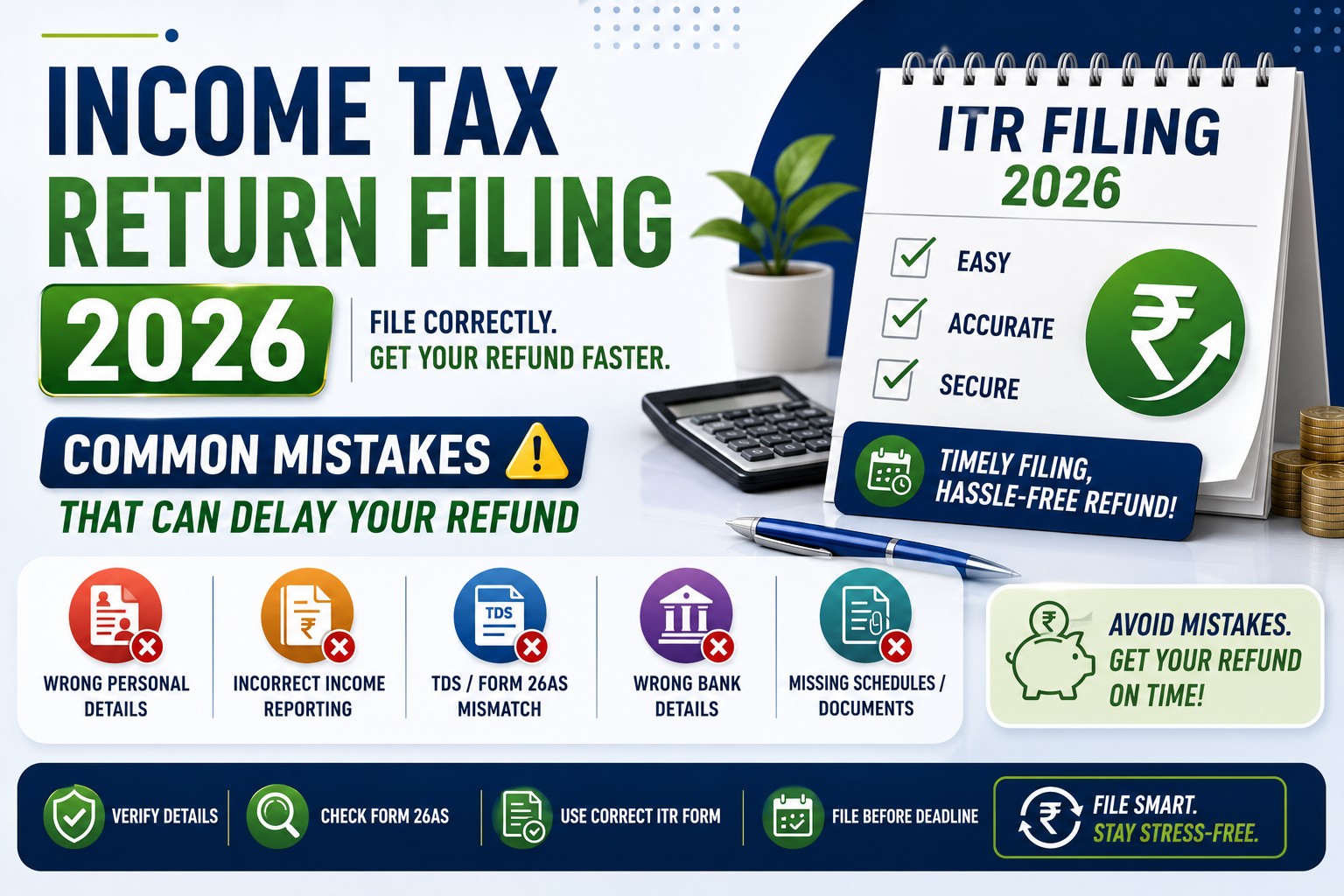
Common Mistakes Salaried Employees Should Avoid
Even experienced taxpayers make avoidable errors.
1. Filing Without Checking AIS
Always reconcile your return with the Annual Information Statement.
2. Using the Wrong ITR Form
This is one of the most frequent reasons for defective return notices.
3. Forgetting Interest Income
Savings account and fixed deposit interest are often omitted.
4. Ignoring Capital Gains
Even small gains from shares or mutual funds should be reported where applicable.
5. Choosing the Wrong Tax Regime
Evaluate both regimes before filing instead of accepting the default option.
6. Not Verifying the Return
Your filing remains incomplete until the return is successfully e-verified.
7. Incorrect Bank Account Details
Incorrect account information can delay or prevent refund processing.
8. Waiting Until the Last Day
Last-minute filing increases the likelihood of mistakes and technical issues.
How to Track Your Income Tax Refund
After your return has been processed, you can monitor the refund status through the income tax portal.
Typical refund stages include:
- Return successfully filed
- Return verified
- Return under processing
- Refund approved
- Refund credited
Refund timelines vary depending on return accuracy, verification status, and departmental processing.
Why Professional CA Assistance Can Make a Difference
While many salaried individuals can file straightforward returns themselves, professional guidance becomes valuable when your financial situation is more complex.
You should consider consulting a Chartered Accountant if you:
- Have multiple employers.
- Earn rental income.
- Have capital gains from shares or mutual funds.
- Own foreign assets.
- Receive ESOPs or RSUs.
- Have freelance or consulting income.
- Want to optimize tax planning legally.
- Receive an income tax notice.
- Need assistance with revised or updated returns.
Professional review can reduce errors, improve compliance, and help identify legitimate tax-saving opportunities.
Conclusion
Filing your Income Tax Return is not just a statutory requirement—it is an essential part of responsible financial management. By understanding the correct ITR form, choosing the appropriate tax regime, keeping your documents organized, and carefully reviewing every detail before submission, you can avoid common mistakes and ensure a smooth filing experience.
As tax regulations continue to evolve with the implementation of the new Income Tax Act and procedural changes announced in Union Budget 2026, staying informed is more important than ever. Whether you are filing your first return or managing multiple income sources, accurate filing today can save significant time, money, and compliance issues in the future.
Need Expert Assistance with Your ITR Filing?
Whether you’re a salaried employee, senior professional, NRI, or someone with multiple income sources, Bharat A. Choudhary & Co. can help you file your Income Tax Return accurately, maximize eligible tax benefits, and ensure complete compliance with the latest tax regulations.
Schedule a consultation today and file your ITR with confidence.
6. FAQ SECTION
1. Who should file an Income Tax Return (ITR) in 2026?
Any individual whose income exceeds the prescribed exemption limit or who meets mandatory filing conditions under the Income-tax Act should file an ITR.
2. Which ITR form is applicable for salaried employees?
Most salaried individuals file ITR-1 (Sahaj), while those with capital gains, multiple properties, foreign assets, or other specified income sources generally need ITR-2.
3. Can I file my ITR without Form 16?
Although Form 16 makes salary reporting easier, you can still file your return using salary slips, Form 26AS, the Annual Information Statement (AIS), the Taxpayer Information Summary (TIS), and bank statements. Ensure that all salary, TDS, and other income details are accurately reconciled before filing.
4. What documents are required for ITR filing?
The commonly required documents include PAN, Aadhaar, Form 16 (if applicable), Form 26AS, AIS, TIS, bank statements, investment proofs, and loan interest certificates.
5. Which tax regime should salaried employees choose?
There is no single answer—the better option depends on your salary structure, deductions, exemptions, and investment pattern.
6. What happens if I miss the ITR filing deadline?
Missing the due date may result in late filing fees, interest on outstanding tax, delayed refunds, and restrictions on certain tax benefits.
7. How can I check the status of my income tax refund?
The portal typically displays stages such as return filed, verified, under processing, refund approved, and refund credited. Refund timelines depend on the accuracy of the return and departmental processing.
8. Why should I hire a Chartered Accountant for ITR filing?
A Chartered Accountant helps ensure accurate filing, legal tax optimisation, and compliance with the latest tax laws.