
TL;DR
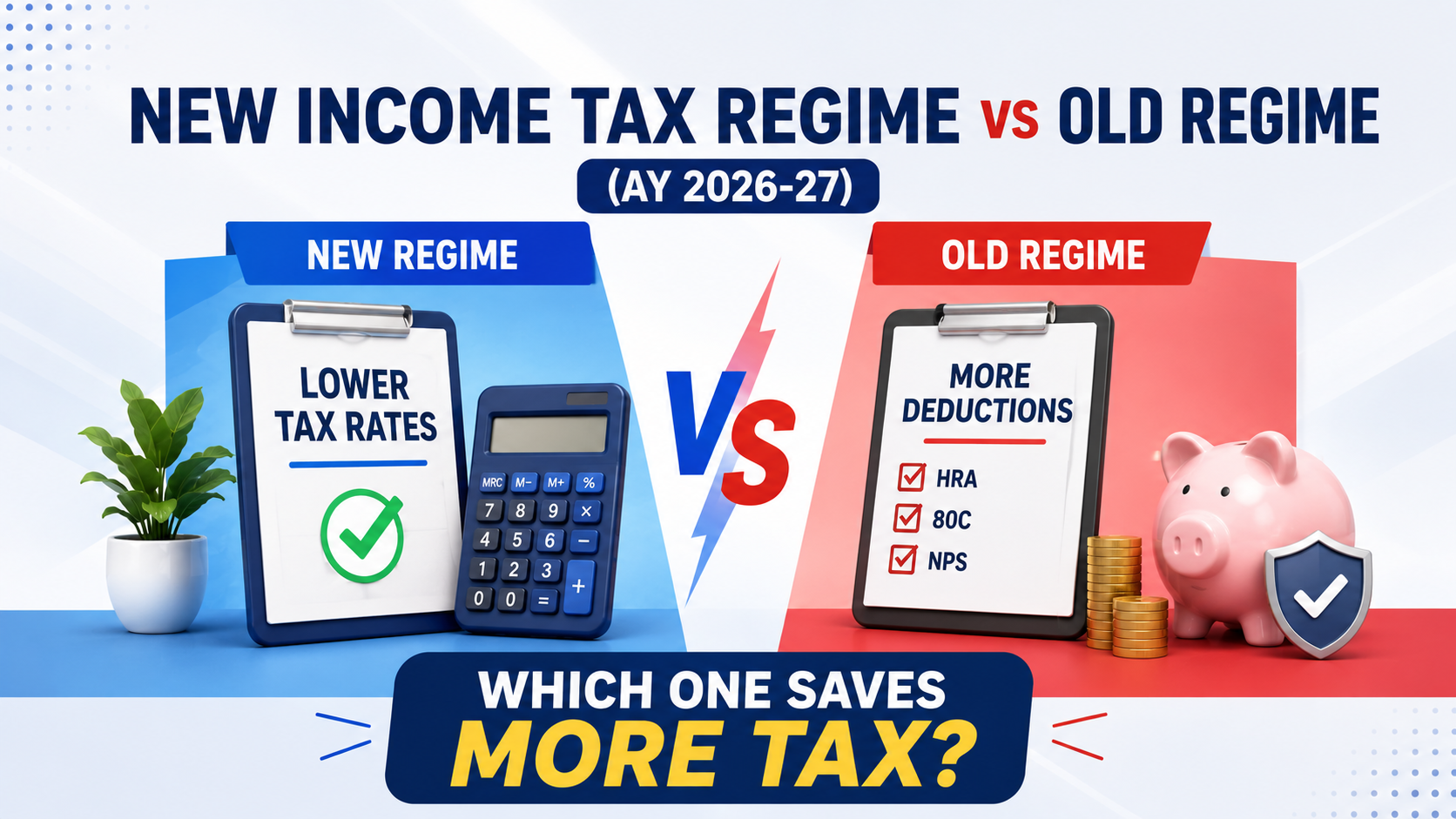
For AY 2026–27, the New Tax Regime is simpler with lower slab rates, but limited deductions. The Old Tax Regime offers higher deductions like 80C, HRA, and home loan interest. If your deductions are high, Old Regime saves more tax. If not, New Regime is usually better.
New Income Tax Regime vs Old Tax Regime (AY 2026-27)
Choosing between the Old and New Tax Regime is one of the most important financial decisions for salaried individuals in India. The right choice can directly impact your annual savings, refund amount, and overall tax liability.
With continuous changes in income tax rules, especially after recent budget updates, taxpayers are often confused about which regime actually saves more money.
Let’s break it down in a simple, practical way.
Understanding Both Tax Regimes
Old Tax Regime
The Old Tax Regime allows taxpayers to reduce taxable income using exemptions and deductions such as:
- Section 80C (EPF, PPF, ELSS, LIC)
- HRA exemption
- Home loan interest deduction
- 80D health insurance
- LTA benefits
- Standard deduction (for salaried individuals)
This regime encourages tax planning through investments and savings.
New Tax Regime
The New Tax Regime offers:
- Lower slab rates
- Higher rebate benefits
- Simplified filing process
- Fewer exemptions and deductions allowed
It is designed for simplicity, not investment-based tax saving.
Key Differences Between Old and New Tax Regime
| Feature | Old Regime | New Regime |
|---|---|---|
| Tax Slabs | Higher | Lower |
| Deductions | Allowed | Mostly not allowed |
| HRA | Allowed | Not allowed |
| 80C Benefits | Allowed | Not allowed |
| Complexity | High | Low |
| Best For | Investors & planners | Simple salary earners |
Deductions: What You Lose or Gain
Old Tax Regime Benefits
You can reduce taxable income through:
- ₹1.5 lakh under Section 80C
- ₹25,000–₹50,000 under 80D
- HRA exemption (based on rent)
- Home loan interest deduction
- Standard deduction
New Tax Regime Benefits
- Lower tax slabs
- Higher rebate for eligible income levels
- Easier compliance
- No need for investment proofs
Real Salary Comparison Example
Example: ₹10,00,000 annual salary
Old Tax Regime (with deductions)
Assume deductions: ₹2,00,000
Taxable income reduces → Lower tax liability
New Tax Regime
No deductions applied → Tax calculated on full salary but at lower rates
👉 Result:
- If deductions are high → Old Regime saves more
- If deductions are low → New Regime saves more
Which Tax Regime Should You Choose?
Choose Old Tax Regime if:
- You invest under 80C regularly
- You pay home loan interest
- You claim HRA
- You have insurance policies
- You actively do tax planning
Choose New Tax Regime if:
- You have minimal investments
- You want simple tax filing
- You don’t claim many deductions
- You prefer higher in-hand salary
Common Mistakes Taxpayers Make
- Automatically selecting new regime without comparison
- Ignoring deductions eligibility
- Not considering HRA benefits
- Not calculating both scenarios
- Missing professional guidance
Expert CA Insight
Most salaried individuals in India fall into a “break-even zone” where both regimes are close.
A Chartered Accountant can help by:
- Running both tax simulations
- Identifying hidden deductions
- Planning salary restructuring
- Maximizing legal tax savings
Conclusion
There is no single “best” tax regime for everyone. The right choice depends entirely on your income structure, deductions, and financial planning habits.
Before filing your ITR for AY 2026–27, always compare both regimes carefully.
6. FAQ SECTION
1. Which tax regime is better for AY 2026-27?
It depends on your deductions. Old regime is better for high deductions, new regime for simpler cases.
2. Can I switch between old and new tax regime every year?
Yes, salaried individuals can choose between regimes every financial year.
3. Is standard deduction available in the new tax regime?
The new tax regime now allows a standard deduction for salaried individuals, making it more attractive compared to earlier years, though most other exemptions are still not allowed.
4. Who should choose the old tax regime?
If you invest in 80C instruments, pay home loan interest, or claim HRA, the old regime may help reduce taxable income significantly.
5. Who should choose the new tax regime?
Individuals with fewer deductions and simple salary structures should choose the new regime.
6. Which regime gives higher tax savings?
Savings depend on your income level, deductions, and financial planning. A personalized calculation is necessary to determine the best option.
7. Can I change my tax regime after filing ITR?
You may revise your return under certain conditions, but it is always better to choose the correct regime initially to avoid complications.
8. Do I need a CA to choose the right tax regime?
A CA can compare both regimes using your actual salary structure and deductions to ensure maximum tax savings.